Estrogen is not a hormone to fear or fight. It is essential for bone strength, heart health, mood, and reproductive function in both women and men. The problem is never estrogen itself; it is balance, specifically when estrogen runs high relative to the other hormones it works alongside.
That imbalance, often called estrogen dominance, is a popular wellness term rather than a formal medical diagnosis, but the symptoms people describe are real: heavy or irregular periods, worsening PMS, breast tenderness, water retention, mood swings, and stubborn weight around the hips. The encouraging news is that diet has a genuine, mechanism-backed role in helping the body process and clear excess estrogen.
This guide covers what estrogen balance really means, the honest evidence on the foods that support it, the surprising role of your gut, and a practical way to eat for healthy hormones.
Quick Summary: The body balances estrogen partly by clearing the excess through the liver and gut, and diet supports that process. The best-evidenced foods are high-fiber foods, which help the gut excrete estrogen rather than recycle it, and cruciferous vegetables like broccoli, cauliflower, and cabbage, which support healthy estrogen metabolism. Flaxseed, a healthy body weight, and a strong gut microbiome also help. “Estrogen dominance” is a wellness term, not a formal diagnosis, so persistent symptoms deserve medical evaluation.
What Estrogen Balance Actually Means
Estrogen does not act alone. In the female cycle it works in a rhythm with progesterone, and balance refers to the relationship between them as much as to the absolute level of estrogen. This is why people can feel the effects of estrogen running high even when a blood test shows a number within the normal range.
Several things can tip the balance. Excess body fat produces extra estrogen, the liver and gut may clear it too slowly, stress and low progesterone can shift the ratio, and exposure to estrogen-mimicking chemicals in the environment can add to the load.
It is worth being clear that estrogen dominance is a popular concept rather than a formal medical diagnosis. The symptoms are real and worth addressing, but persistent or severe symptoms deserve proper medical evaluation to identify the actual cause. Our hormonal balance foods for women guide and organic food and hormonal balance guide cover the wider hormonal picture.
The Gut Connection: Where Estrogen Balance Is Won or Lost
This is the most important and least understood part of estrogen balance, and the science behind it is genuinely compelling. A specific community of gut bacteria, known as the estrobolome, helps regulate how much estrogen stays in the body.
Here is how it works. The liver packages used estrogen for removal and sends it to the gut for excretion. But certain gut bacteria produce an enzyme called beta-glucuronidase that can unpack that estrogen and send it back into circulation instead of letting it leave the body. A balanced, fiber-fed microbiome keeps this recycling in check, while an unhealthy one can reactivate and recirculate estrogen, raising the load.
This is why gut health and estrogen balance are deeply linked. Fiber plays a double role here, feeding beneficial bacteria and binding estrogen in the gut so it is excreted rather than reabsorbed. A controlled study in premenopausal women found that higher fiber intake was followed by lower circulating estrogen.
The practical takeaway is that supporting your gut supports your hormones. Our gut health and organic food guide covers how to build the microbiome that keeps estrogen clearance working, and our organic yogurt and kefir guide covers the fermented foods that help.
Fiber: The Most Evidence-Backed Lever
If there is one dietary change with the strongest support for estrogen balance, it is eating more fiber. Fiber works through the gut mechanism above, binding estrogen and promoting its excretion while feeding the bacteria that keep recycling in check.
The effect is measurable. In controlled research, higher fiber intake is associated with lower circulating estrogen levels, making it one of the more reliable dietary levers available.
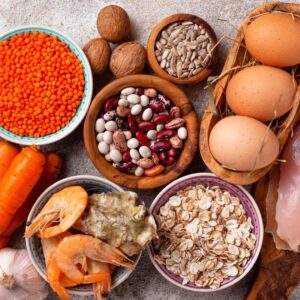
Good sources span the whole plant world: vegetables, fruit with skin, whole grains, legumes, nuts, and seeds. Our organic lentils and beans guide, organic oats guide, and psyllium husk guide cover high-fiber staples that support both gut health and hormone clearance.
The simplest high-impact move most people can make is to raise fiber intake steadily toward 25 to 35 grams a day from a variety of whole plant foods.
Cruciferous Vegetables and the Compounds That Help
Cruciferous vegetables are the most famous estrogen-balancing foods, and they have a real, if modest, basis. Broccoli, cauliflower, cabbage, Brussels sprouts, and kale contain compounds called indole-3-carbinol and its derivative DIM, which support the liver pathways that metabolize estrogen toward its gentler forms.
The honest framing matters here. The evidence for eating the vegetables is reasonable and they shift estrogen metabolism in a favorable direction, but the effect is gentle. Concentrated DIM supplements show biomarker changes rather than proven symptom relief, so the whole vegetables are the sensible choice and a genuinely healthy one regardless.
Our cauliflower guide, cabbage guide, and kale, collard and mustard greens guide cover these nutrient-dense options, and our organic dark leafy greens guide covers the wider green vegetable family that supports hormonal health.
The Best Foods for Estrogen Balance
Beyond fiber and cruciferous vegetables, several foods contribute to healthy estrogen metabolism. Here is the full picture.
| Food Group | How It Supports Estrogen Balance |
|---|---|
| High-fiber foods | Bind and excrete estrogen; feed the gut |
| Cruciferous vegetables | Support healthy liver estrogen metabolism |
| Flaxseed | Lignans gently modulate estrogen activity |
| Fermented foods | Support the gut bacteria that regulate estrogen |
| Leafy greens | Fiber, antioxidants, and liver support |
| Legumes | Fiber plus balanced plant compounds |
| Whole grains | Fiber for gut and hormone clearance |
Flaxseed deserves a mention as a food with promising if limited evidence. Its lignans are plant compounds that appear to gently modulate estrogen activity, and small trials have shown they shift estrogen metabolism favorably. Ground flaxseed is easy to add to meals.
Fermented foods support the estrobolome directly by diversifying the gut bacteria involved in estrogen regulation. Our organic greek yogurt guide and organic yogurt and kefir guide cover these.
For plant compounds and protein, our plant-based organic protein guide and organic tempeh guide cover soy foods, which despite their reputation are balanced rather than disruptive for most people.
Body Fat, Blood Sugar, and the Bigger Picture
Food choices matter, but two broader factors shape estrogen balance as much as any single food.
Body fat is a major driver, because fat tissue produces estrogen through an enzyme called aromatase. More excess fat means more estrogen production, which is why reaching and maintaining a healthy weight is one of the most effective things anyone can do for estrogen balance. Our organic food for weight loss guide covers the whole-food approach.
Blood sugar and insulin also influence hormones, since insulin resistance can worsen hormonal imbalance. Stable blood sugar from whole foods supports balance across the board. Our foods for blood sugar balance guide covers this.
For men, estrogen balance follows the same core principle, with body fat and aromatase playing the leading role. The dietary approach overlaps heavily with what supports women, centered on fiber, cruciferous vegetables, and a healthy weight.
What to Limit for Better Balance
Supporting estrogen balance also means reducing the things that work against it.
| Limit or Reduce | Why It Hurts Balance |
|---|---|
| Excess alcohol | Burdens the liver that clears estrogen |
| Ultra-processed foods | Low fiber, drive fat gain |
| Excess refined sugar | Worsens insulin and hormonal balance |
| Excess body fat | Produces additional estrogen |
| Conventional high-residue produce | May add estrogen-mimicking chemical exposure |
Alcohol is worth singling out, since it directly burdens the liver responsible for processing and clearing estrogen. Reducing it eases that load. Choosing organic for high-residue produce also reduces exposure to some estrogen-mimicking chemicals, which is where the organic choice intersects with hormonal health. Our health benefits of eating organic guide covers that connection.
A Practical Framework for Estrogen Balance
Putting it together, here is how to eat for healthier estrogen balance.
Make fiber the foundation. Aim for 25 to 35 grams a day from varied whole plants, the single most evidence-backed lever.
Eat cruciferous vegetables regularly. Broccoli, cauliflower, cabbage, and kale support healthy estrogen metabolism and overall health.
Support your gut. Fermented foods and a fiber-rich diet keep the estrobolome balanced so estrogen is cleared, not recycled.
Add ground flaxseed. A simple daily addition with promising evidence for gentle estrogen modulation.
Mind weight, alcohol, and sugar. A healthy body weight, moderate alcohol, and stable blood sugar address the biggest non-food drivers. Our organic foods for women over 40 guide and organic foods for PMS guide cover hormonal eating through life stages.
FAQs
1. What foods help balance estrogen levels? The best-evidenced foods are high-fiber foods, which help the gut excrete estrogen rather than recycle it, and cruciferous vegetables like broccoli, cauliflower, and cabbage, which support healthy estrogen metabolism. Flaxseed, fermented foods, leafy greens, and legumes also contribute to balance.
2. What are the symptoms of too much estrogen? People describe heavy or irregular periods, worsening PMS, breast tenderness, water retention, mood swings, and stubborn weight around the hips. These symptoms are real but can have many causes, so persistent or severe symptoms should be evaluated by a doctor rather than self-diagnosed.
3. How does fiber affect estrogen? Fiber is one of the strongest dietary levers. It binds estrogen in the gut so it is excreted rather than reabsorbed, and it feeds the beneficial bacteria that keep estrogen recycling in check. Controlled research links higher fiber intake to lower circulating estrogen levels.
4. Do cruciferous vegetables really lower estrogen? They help modestly. Broccoli, cauliflower, cabbage, and kale contain indole-3-carbinol and DIM, which support the liver pathways that metabolize estrogen favorably. The effect from eating the vegetables is gentle, and concentrated DIM supplements show biomarker changes rather than proven symptom relief.
5. What is the gut’s role in estrogen balance? A community of gut bacteria called the estrobolome regulates how much estrogen stays in the body. Some bacteria produce an enzyme that can send packaged estrogen back into circulation instead of letting it leave. A healthy, fiber-fed microbiome keeps this recycling in check, so gut health directly affects estrogen balance.
6. Is estrogen dominance a real medical condition? “Estrogen dominance” is a popular wellness term rather than a formally recognized medical diagnosis. The symptoms people describe are real, but a clinician evaluating them would typically look for a specific underlying cause. Diet genuinely supports estrogen metabolism, but persistent symptoms deserve medical evaluation.
7. Does body weight affect estrogen? Yes, significantly. Fat tissue produces estrogen through an enzyme called aromatase, so excess body fat raises estrogen levels. Reaching and maintaining a healthy weight is one of the most effective non-food steps for supporting estrogen balance in both women and men.
8. Does flaxseed help balance estrogen? The evidence is promising but limited. Flaxseed contains lignans, plant compounds that appear to gently modulate estrogen activity, and small trials have shown they shift estrogen metabolism favorably. Ground flaxseed is an easy, low-risk daily addition for most people.
The Bottom Line
Estrogen balance is not about eliminating a vital hormone; it is about helping the body process and clear it efficiently so it stays in a healthy relationship with your other hormones. The strongest dietary levers are fiber, which binds and excretes estrogen through the gut, and the estrobolome, the gut bacteria that decide whether estrogen is cleared or recycled. Cruciferous vegetables, flaxseed, fermented foods, and a healthy body weight all add meaningful support.
Keep expectations honest. “Estrogen dominance” is a wellness term rather than a formal diagnosis, and while these foods genuinely support healthy estrogen metabolism, persistent or severe symptoms deserve proper medical evaluation. Eat a fiber-rich, plant-forward, gut-friendly diet, and you give your body the tools it needs to keep estrogen in balance.
For the broader foundations, our guides on hormonal balance foods for women and the health benefits of eating organic cover eating for hormonal health as a whole.
This article is for educational purposes and is not medical advice. Hormonal symptoms can have many causes, some serious, and persistent changes in your cycle, mood, or body should be evaluated by a doctor rather than self-treated through diet alone.