Most men chasing better health obsess over training and diet while treating sleep as the thing they will fix later. That is backwards. One week of short sleep, just five hours a night, dropped testosterone in healthy young men by 10 to 15%, the equivalent of aging more than a decade. Sleep is not the recovery you earn after the work. For a man’s hormones, muscle, and mind, it is the work.
The good news is that food and sleep run on a two-way street. What you eat shapes how well you sleep, and how well you sleep shapes how your body uses what you eat. Get both right and they compound. Get them wrong and they drag each other down.
This guide covers why sleep is the foundation of male recovery, the honest evidence on foods that help you sleep, what to eat and avoid around bedtime, and how nutrition and rest work together for men.
Quick Answer: Sleep is when men produce most of their testosterone, repair muscle, and consolidate recovery, and short sleep measurably lowers testosterone. Nutrition and sleep reinforce each other: diets rich in whole foods, fiber, and magnesium support better sleep, while poor sleep drives cravings and worse food choices. Some foods, like tart cherries and kiwi, have modest evidence for improving sleep, mainly through melatonin and tryptophan. The strongest lever is an overall whole-food pattern, not any single bedtime snack.
Why Sleep Is the Foundation of Men’s Recovery
For men, sleep is not downtime; it is peak production time for the systems that matter most. The bulk of daily testosterone is released during sleep, particularly during the deep and REM stages, which is why cutting sleep short cuts hormones short.
The landmark evidence is hard to ignore. In a controlled study, healthy young men restricted to five hours of sleep for one week saw their daytime testosterone fall by 10 to 15%. That is a large drop from a single week of a habit many men consider normal.
Sleep is also when muscle repairs, growth hormone peaks, the brain clears metabolic waste, and the nervous system resets. No amount of training or supplementation compensates for consistently missing it. Our protein for muscle recovery guide covers the nutrition side of repair that sleep completes, and our foods to boost testosterone guide covers the hormonal picture sleep underpins.
The Two-Way Street Between Food and Sleep
Nutrition and sleep are not separate topics; they feed each other in both directions, and understanding the loop is what makes it actionable.
In one direction, what you eat affects how you sleep. Diets high in fiber and whole foods are associated with deeper, more restorative sleep, while diets high in sugar and ultra-processed food are linked to lighter, more broken sleep. Stable blood sugar through the day and evening prevents the dips and spikes that fragment sleep.
In the other direction, how you sleep affects what you eat. Poor sleep raises the hunger hormone ghrelin and lowers the fullness hormone leptin, driving cravings for high-sugar, high-calorie food the next day. One bad night sets up a day of worse choices.
This loop means that fixing either side helps the other. Our foods for blood sugar balance guide covers the steady-energy eating that supports sleep, and our men’s mental health diet guide covers the gut and mood connections that tie in.
The Honest Evidence on Foods That Help Sleep
Plenty of foods are marketed as sleep aids. A few have real, if modest, evidence, and it is worth knowing which, because the effect is gentle and works best alongside good habits rather than as a magic bullet.
Tart cherries are the most studied. They naturally contain melatonin and compounds that support its production, and several small trials found tart cherry juice improved sleep time and efficiency, especially in older adults with insomnia. The evidence is mixed, with some studies showing no effect, so treat it as a helpful nudge, not a guarantee.
Kiwifruit has promising early evidence. Small studies, including one in athletes eating two kiwis before bed, reported improved sleep quality and duration. The effect may come from serotonin and antioxidants, though the research is still limited.
| Food | Sleep-Relevant Compound | Evidence Strength |
|---|---|---|
| Tart cherries | Melatonin, polyphenols | Modest, mixed |
| Kiwifruit | Serotonin, antioxidants | Promising, limited |
| Fatty fish | Omega-3, vitamin D | Supportive |
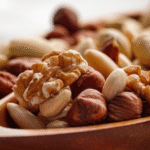
| Nuts and seeds | Magnesium, melatonin | Supportive |
| Dairy and poultry | Tryptophan | Plausible mechanism |
The honest framing is that food melatonin is far lower than supplement doses, so these foods work gently through several pathways rather than as a drug. Our organic blueberries guide and organic nuts and seeds guide cover whole foods that contribute to the supportive pattern.
Tryptophan, Magnesium, and the Nutrients Behind Sleep
Behind the specific foods are a few nutrients that genuinely matter for the body’s sleep machinery.
Tryptophan is the amino acid the body converts into serotonin and then into melatonin, the hormone that signals sleep. It is found in turkey, chicken, eggs, dairy, and seeds. Pairing tryptophan foods with some carbohydrate helps it reach the brain, which is part of why a balanced evening meal supports sleep.
Magnesium supports the nervous-system calm that precedes sleep, and a shortfall is linked to poor sleep and restlessness. Since magnesium insufficiency is common in men, it is one of the more worthwhile gaps to close. Seeds, nuts, leafy greens, and legumes are the best food sources, and correcting a mineral gap like this often improves sleep and stress resilience together, much like the zinc gap covered in our zinc deficiency guide.
Omega-3s and vitamin D both correlate with better sleep quality, and oily fish delivers both. Our organic fish buying guide and vitamin D food sources guide cover these.
The theme is that no single nutrient is a sleep switch. They work together as part of a nutrient-dense diet, which is why the overall pattern beats any isolated pill.
What to Eat and Avoid Around Bedtime
Timing and choices in the evening have an outsized effect on sleep quality. A few simple rules cover most of it.
| Do | Avoid |
|---|---|
| A light, balanced evening meal | Large, heavy meals close to bed |
| Tryptophan plus some complex carbs | High sugar and refined carbs at night |
| Finishing eating 2 to 3 hours before bed | Alcohol as a sleep aid |
| Herbal tea or tart cherry if desired | Caffeine after early afternoon |
| Magnesium-rich foods in the evening | Large fluid volumes right before bed |
The two biggest disruptors are alcohol and caffeine. Alcohol feels sedating but fragments sleep and suppresses REM, worsening recovery even when it helps you fall asleep. Caffeine has a long half-life, so an afternoon coffee can still be in your system at bedtime. Cutting caffeine after early afternoon is one of the highest-impact changes a man can make.
Our cortisol-lowering foods guide covers how evening stress and diet raise the cortisol that competes with restful sleep.
How Sleep and Nutrition Compound for Recovery
For men focused on training, body composition, or hormonal health, sleep and nutrition are not two separate levers but one combined system.
Muscle recovery depends on both. Protein supplies the building blocks, but the actual repair and the growth hormone that drives it happen during deep sleep. Eat well and sleep badly, and you waste much of the protein’s potential.
Testosterone depends on both. Zinc, magnesium, healthy fats, and adequate calories support production, but the production itself is concentrated in sleep. The nutrients set the stage; sleep runs the show. Our organic foods for men over 40 guide covers this combined framework as hormonal margins narrow with age.
Even fat loss depends on both, since poor sleep drives the cravings and insulin resistance that undermine a good diet. The practical lesson is to stop treating sleep as optional and start treating it as the multiplier that makes your nutrition work.
A Practical Framework for Men
Bringing it together, here is how to make food and sleep work for your recovery.
Build a whole-food base. A diet rich in vegetables, fiber, lean protein, and healthy fats supports better sleep more reliably than any bedtime trick.
Close the magnesium gap. Seeds, nuts, leafy greens, and legumes support the nervous-system calm that sleep needs.
Time your evening well. Finish a light, balanced dinner a couple of hours before bed, and keep it lower in sugar.
Cut caffeine early and alcohol down. These are the two most common diet-driven sleep disruptors for men.
Treat sleep as training. Protect seven to nine hours as seriously as you protect your workouts and your protein, because it is what makes both pay off.
FAQs
1. How does sleep affect testosterone in men? Most of a man’s daily testosterone is produced during sleep, especially deep and REM stages. In one controlled study, healthy young men who slept just five hours a night for a week saw their testosterone fall by 10 to 15%. Protecting seven to nine hours of sleep is one of the most effective things a man can do for his hormones.
2. What foods help you sleep better? Tart cherries and kiwifruit have the most direct evidence, working through melatonin, serotonin, and antioxidants, though the effect is modest. More broadly, a whole-food diet rich in magnesium, tryptophan, omega-3s, and fiber supports better sleep than any single food. Nuts, seeds, oily fish, and leafy greens all contribute.
3. Which foods contain melatonin? Tart cherries are the best-known melatonin-containing food, along with kiwi, grapes, and some nuts like pistachios. However, the melatonin in food is far lower than in supplements, so these foods nudge sleep gently through several pathways rather than acting like a sleep drug.
4. Does what I eat really affect how I sleep? Yes, and it works both ways. Diets high in fiber and whole foods support deeper sleep, while sugary, ultra-processed diets are linked to lighter, broken sleep. In turn, poor sleep raises hunger hormones and drives cravings the next day, so food and sleep form a loop that reinforces itself in either direction.
5. What should I avoid eating before bed? Avoid large heavy meals close to bedtime, high-sugar and refined-carb snacks, and especially alcohol and late caffeine. Alcohol fragments sleep and suppresses REM even though it feels sedating, and caffeine’s long half-life means an afternoon coffee can still disrupt sleep at night.
6. How does tryptophan help sleep? Tryptophan is the amino acid the body converts into serotonin and then melatonin, the hormone that signals sleep. It is found in turkey, chicken, eggs, dairy, and seeds. Pairing tryptophan-rich foods with some complex carbohydrate helps it reach the brain, which is why a balanced evening meal supports sleep.
7. Why is sleep important for muscle recovery? Muscle repair and the release of growth hormone that drives it are concentrated during deep sleep. Protein supplies the raw material, but sleep is when the rebuilding happens. Eating well while sleeping poorly wastes much of your nutrition’s recovery potential, which is why the two work as one system.
8. How much sleep do men need for recovery? Most adults need seven to nine hours for full hormonal, muscular, and cognitive recovery. For men focused on training, body composition, or testosterone, consistently hitting this range matters as much as diet and exercise, since it is when the body actually carries out recovery.
The Bottom Line
For men, sleep is where recovery actually happens, where most testosterone is produced, where muscle repairs, and where the brain resets, and even a week of short sleep measurably lowers hormones. Nutrition and sleep are a two-way street: a whole-food, magnesium-rich, blood-sugar-stable diet supports better sleep, and better sleep supports better food choices and recovery.
Some foods, like tart cherries and kiwi, offer a modest, evidence-backed nudge through melatonin and tryptophan, but the real power is in the overall pattern, not a single snack. Eat a nutrient-dense diet, time your evenings sensibly, cut the caffeine and alcohol that sabotage sleep, and protect your hours in bed as seriously as your training. That is how recovery compounds.
For the broader foundations, our guides on organic foods for men over 40 and the health benefits of eating organic cover eating for men’s health as a whole.
This article is for educational purposes and is not medical advice. Persistent sleep problems can signal underlying conditions such as sleep apnea and deserve evaluation by a doctor rather than self-treatment through diet alone.