Organic compost transforms lawns and gardens from chemical-dependent monocultures into thriving ecosystems. Healthy soil feeds plants. Healthy plants resist pests naturally. This cascade starts with compost.
Most people view lawns as grass requiring constant chemical fertilizer inputs. Organic compost perspective flips this entirely. The soil becomes the focus. Nutrients in living compost feed the microbes feeding your plants.
Why Organic Compost for Lawn Care
Chemical fertilizers force rapid growth without building soil structure. Plants weaken. Pests multiply. More chemicals become necessary creating dependency cycles.
Organic compost builds differently. The organic matter improves soil structure. Beneficial microbes multiply. Nutrient exchange happens naturally. Your lawn becomes self-sustaining.
Organic food and environment benefits principles apply directly to home landscapes. Chemical-free approach supports beneficial insects, earthworms, and microorganisms creating natural pest control.
Organic Compost Basics
Organic compost contains decomposed plant and animal materials. This decomposition creates dark, crumbly material rich in nutrients and beneficial microbes. The finished product smells earthy, not chemical.
Three ingredients combine in proper ratios. Brown materials like dried leaves, straw, and paper contain carbon. Green materials like grass clippings, vegetable scraps, and plant trimmings contain nitrogen. Water activates decomposition. Air circulation accelerates the process.
Temperature indicates active decomposition. Hot compost piles reach 130-150 degrees Fahrenheit killing weed seeds and pathogens. Cooler piles decompose slower but still produce excellent results.
Finished compost appears dark brown or black. The original materials become unrecognizable. This transformation typically requires 3-6 months for hot piles or 6-12 months for cold piles.
DIY Compost Guide
Building your own compost costs almost nothing. Three pallets arranged in open-bottom structure create basic bin. Larger systems use purchased bins or constructed structures.
Layer brown and green materials alternately. Aim for roughly three parts brown to one part green. This ratio prevents odor problems while optimizing decomposition speed.
Water regularly maintaining moisture level like a wrung-out sponge. Too dry slows decomposition. Too wet creates anaerobic conditions producing odors.
Turn compost piles every 2-3 weeks accelerating decomposition. Turning distributes microbes and air throughout. Skip turning for “cold” composting taking longer but requiring less effort.
Add finished compost to lawns and gardens. Work into top 2-3 inches of soil. Annual applications build soil structure and nutrient content progressively.
Establishing New Lawn with Compost
Preparing soil before seeding determines long-term lawn success. Clear existing grass and weeds. Till soil breaking up compacted earth. Remove rocks and debris.
Spread 2-3 inches organic compost across prepared area. Till into top 6-8 inches soil creating uniform blend. This incorporation distributes nutrients while improving soil structure dramatically.
Seed immediately after preparation. Compost-enriched soil provides perfect seed-starting environment. Germination rates improve. Seedling vigor increases.
Water consistently until established. The compost retains moisture reducing watering frequency compared to depleted soil. New lawns typically establish within 3-4 weeks.
Top-dress established lawns annually with quarter-inch compost layer. This maintenance approach gradually improves soil without disrupting existing grass.
Natural Lawn Fertilizer Strategy
Organic compost provides slow-release nutrition. Microbes break down organic matter releasing nutrients as plants need them. This prevents nutrient burning and runoff.
Nitrogen from grass clippings feeds new growth. Phosphorus supports root development. Potassium strengthens disease resistance. Trace minerals address specific deficiencies.
Earthworms thrive in compost-enriched soil. Their burrows improve drainage and aeration. Their castings provide additional nutrient-rich fertilizer.
Beneficial microbes suppress pathogenic organisms. Sustainable living through compost creates closed-loop systems. Organic matter feeds soil life. Soil life feeds plants. Dead plants return to compost. The cycle continues.
Compost vs Chemical Fertilizer Comparison Table
| Factor | Organic Compost | Chemical Fertilizer |
|---|---|---|
| Cost | Low to free | Moderate to high |
| Application frequency | Annually | Multiple per season |
| Soil structure improvement | Excellent | None |
| Beneficial microbes | Increased dramatically | Destroyed |
| Water retention | Improved 30-50% | No improvement |
| Environmental impact | Positive | Negative runoff |
| Plant health long-term | Strengthens | Weakens over time |
| Pest resistance | Natural increase | Requires pesticides |
Establishing New Lawn Success
Soil preparation determines success more than seed selection. Quality seed on poor soil fails. Poor seed on prepared compost-rich soil succeeds.
Test soil before adding amendments. Compost works universally improving all soil types. Clay soils become workable. Sandy soils gain water retention. Loamy soils become richer.
Avoid synthetic chemicals during establishment. This single decision accelerates transition toward self-sustaining landscapes. Chemical-free soil allows beneficial organisms to establish.
Organic Garden Compost Applications
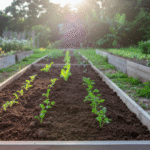
Vegetable gardens benefit enormously from compost incorporation. Work 2-3 inches into garden beds annually. Tomatoes, lettuce, and root vegetables respond dramatically.
Perennial beds receive compost top-dressing in spring. This feeding supports flowering without damaging established plants.
Container gardening benefits from compost-enriched potting mixes. Blend finished compost with peat moss alternatives creating lightweight growing medium.
Houseplants thrive with gentle compost amendment. A thin layer compost over potting soil provides gradual nutrient release.
What Makes Food Organic Applies to Lawns
The same principles protecting organic food environment benefits apply to home landscapes. Chemical-free means beneficial organisms thrive. Pesticide-free means insects, birds, and pollinators flourish.
Sustainable living extends beyond what you eat to where you live. Chemical-free yards support beneficial insects. Pesticide-free properties mean safe play areas for children and pets.
Time Investment Reality
Building compost requires minimal ongoing effort. Initial setup takes an afternoon. Weekly additions require five minutes. Turning takes 15 minutes when performed.
Finished compost application requires one weekend annually. This single annual effort replaces monthly chemical applications continuing indefinitely.
Long-term investment saves money substantially. The time invested compounds returning value continuously.
The Bottom Line
Organic compost transforms lawn and garden care from chemical dependency into sustainable abundance. DIY composting costs almost nothing. Finished compost improves soil structure building long-term fertility. Natural fertilizer eliminates chemical costs and environmental damage. Beneficial organisms thrive creating pest resistance naturally. Establish new lawns using compost-enriched soil. Maintain existing landscapes with annual compost applications. Build closed-loop systems where soil feeds plants and plants feed soil. This approach works. This approach sustains. This approach creates landscapes thriving without chemicals indefinitely.
Frequently Asked Questions
1. How do I start composting at home? Layer brown materials (leaves, straw) and green materials (grass clippings, scraps) in three parts brown to one part green ratio. Water to maintain sponge-like moisture. Turn every 2-3 weeks for faster decomposition or skip turning for slower cold composting.
2. How long does compost take to finish? Hot compost piles decompose in 3-6 months with regular turning. Cold piles require 6-12 months without turning. Temperature, ingredients, and moisture levels affect decomposition speed.
3. Can I use finished compost immediately? Yes. Finished compost appears dark brown or black with unrecognizable original materials. Mix into soil immediately or apply as top-dressing to existing lawns and gardens.
4. How much compost should I apply to my lawn? Apply 2-3 inches when establishing new lawns. Work into top 6-8 inches soil. For existing lawns, apply quarter-inch annual top-dressing maintaining and improving soil quality progressively.
5. What can I compost? Vegetable scraps, grass clippings, leaves, straw, paper, cardboard, coffee grounds, and plant trimmings all compost successfully. Avoid meat, dairy, oils, and diseased plants.
6. Does compost attract pests? Properly maintained compost doesn’t attract pests. Keep green to brown ratio correct, water appropriately, and turn regularly. Avoid meat and dairy which attract unwanted animals.
7. Why is organic compost better than chemical fertilizer? Compost improves soil structure permanently. Chemical fertilizers provide short-term nutrition destroying beneficial microbes. Compost creates self-sustaining systems requiring less maintenance long-term.
8. Can I use compost in containers and houseplants? Yes. Blend finished compost with peat moss alternatives creating lightweight growing medium for containers. Use thin compost layers over potting soil for houseplants.