Skincare shelves keep expanding. Serums, acids, peptides, and ceramides. Meanwhile, the layer that actually builds your skin sits below the surface, and topical products barely reach it.
Your dermis rebuilds itself from raw materials you eat. Collagen fibres, ceramides, antioxidants, and the enzymes that assemble them all come from your plate.
That does not make skincare pointless. It means half the equation happens in the kitchen.
This guide covers the skin health foods women benefit from most, why each one works, and what quietly undermines the whole system.
What Your Skin Is Actually Made Of
Understanding the structure explains why certain nutrients matter.
Your skin has three working layers. The epidermis handles barrier function and holds moisture. The dermis contains collagen and elastin, which provide firmness and bounce. Below that sits fat, which supports the whole structure.
Collagen makes up roughly 75 percent of your dermis by dry weight. Production starts declining in your mid-twenties and drops sharply in the years around menopause, when estrogen falls.
Estrogen supports collagen density, skin thickness, and hydration. Losing it changes skin visibly, which is why nutrition matters more with each decade.
Vitamin C and Collagen
This is the single most important nutrient relationship in skin nutrition.
Collagen synthesis requires two enzymes, prolyl hydroxylase and lysyl hydroxylase. Both need vitamin C to function. Without it, your body produces collagen that cannot form stable fibres.
You cannot store vitamin C. Your skin needs a fresh supply daily.
Vitamin C also works as an antioxidant in skin tissue and helps regenerate vitamin E after it neutralises free radicals.
| Food (serving) | Vitamin C (mg) | Percent of Daily Need |
|---|---|---|
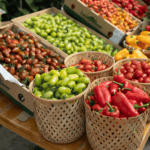
| Red bell pepper, 1 cup raw | 190 | 253% |
| Kiwi, 2 medium | 128 | 171% |
| Strawberries, 1 cup | 89 | 119% |
| Broccoli, 1 cup cooked | 81 | 108% |
| Orange, 1 medium | 70 | 93% |
| Brussels sprouts, 1 cup | 75 | 100% |
| Kale, 1 cup raw | 20 | 27% |
Women need 75 mg daily. Smokers need an extra 35 mg.
Vitamin C degrades with heat, light, and storage time. Eat peppers and berries raw where possible. Our comparison of frozen versus fresh nutrition explains why frozen berries often beat fresh ones that travelled for a week.
Pesticide residues concentrate on soft fruit, so this is one category where organic earns its price. Check our guide to the dirty dozen and clean fifteen before shopping.
Collagen Foods Women Should Know About
Here is where most articles go wrong.
Eating collagen does not deposit collagen in your skin. Your digestive system breaks it into amino acids and peptides, then distributes them wherever your body decides.
That said, hydrolysed collagen peptide trials do show modest improvements in skin elasticity and hydration. The likely mechanism is signalling rather than direct supply, meaning specific peptides prompt fibroblasts to increase production.
The practical takeaway: supply the building blocks and the cofactors, then let your body assemble them.
| Requirement | Why It Matters | Best Sources |
|---|---|---|
| Glycine and proline | Core collagen amino acids | Bone broth, chicken skin, eggs, legumes |
| Vitamin C | Enables collagen cross-linking | Peppers, kiwi, berries, broccoli |
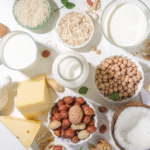
| Copper | Activates lysyl oxidase enzyme | Cashews, sesame seeds, shellfish |
| Zinc | Supports repair and wound healing | Pumpkin seeds, shellfish, lentils |
| Silicon | Supports connective tissue | Oats, bananas, green beans |
| Adequate protein | Raw material for all structural proteins | Eggs, fish, pulses, dairy |
Protein deserves emphasis. Many women eat too little of it, and collagen sits at the bottom of the priority list when supply runs short.
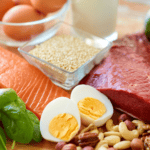
Eggs deliver complete protein plus sulphur compounds skin uses. Our organic eggs guide covers labelling. Lentils and beans work for plant-based eaters, and organic nuts and seeds supply copper and zinc together.
Zinc shortfalls show on skin before almost anywhere else. Our guide to zinc deficiency covers the early signs.
Antioxidants for Skin
Ultraviolet light, pollution, and normal metabolism all generate free radicals. These damage collagen fibres and accelerate visible ageing.
Your skin runs its own antioxidant network. Diet keeps it stocked.
Carotenoids
Beta-carotene, lycopene, and lutein accumulate in skin tissue and absorb some UV energy before it reaches deeper layers. This is not sunscreen. It is a modest supporting layer.
Lycopene from cooked tomatoes absorbs better than from raw. Sweet potatoes, carrots, and dark leafy greens carry the rest.
Polyphenols
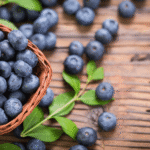
Green tea catechins, cocoa flavanols, and berry anthocyanins all show measurable effects on skin in trial settings.
Cocoa flavanol studies report improved skin density and hydration over 12 weeks. Our guide to organic dark chocolate explains which percentages actually retain flavanols.
Green tea offers similar support with less sugar. See organic green tea benefits for brewing that preserves the catechins.
Vitamin E and Selenium
Vitamin E protects the fatty membranes in skin cells. Sunflower seeds, almonds, and avocado supply it.
Selenium supports glutathione peroxidase, one of the body’s main antioxidant enzymes. Two Brazil nuts cover a full day.
| Antioxidant | Skin Role | Organic Sources |
|---|---|---|
| Vitamin C | Collagen synthesis, free radical defence | Peppers, kiwi, berries |
| Vitamin E | Protects cell membrane fats | Sunflower seeds, almonds, avocado |
| Beta-carotene | Accumulates in skin, absorbs UV energy | Sweet potato, carrots, greens |
| Lycopene | Photoprotective support | Cooked tomatoes |
| Polyphenols | Reduce oxidative and inflammatory load | Green tea, dark chocolate, berries |
| Selenium | Powers glutathione enzymes | Brazil nuts, fish, eggs |
Fats Build the Barrier
Your skin barrier is largely fat. Ceramides, cholesterol, and fatty acids hold it together and lock moisture in.
Omega-3 fats reduce inflammatory signalling and support barrier integrity. Oily fish provides EPA and DHA directly, which works better than the conversion from plant sources.
Two servings weekly is a reasonable target. Our organic fish buying guide covers sourcing.
Monounsaturated fats from olive oil and avocado support barrier function too. Observational data links higher olive oil intake with fewer signs of photoageing.
The balance matters as much as the amount. Diets heavy in refined seed oils push the omega-6 to omega-3 ratio toward inflammation.
The Gut and Skin Connection
Skin conditions and gut health track together more closely than most people expect.
Your gut microbiome influences systemic inflammation, which shows up in the skin. It also affects nutrient absorption, so a compromised gut undermines everything else on this list.
Fibre feeds the bacteria that produce anti-inflammatory short-chain fatty acids. Fermented foods add live cultures directly.
Our overview of organic food and gut health covers the mechanism, and our comparison of organic yogurt and kefir explains which products carry cultures worth eating.
Hormones and Skin
Skin responds to hormonal shifts in ways diet can influence.
Elevated insulin raises androgen activity and drives sebum production, which contributes to adult acne. High glycaemic diets show consistent associations with breakouts.
Steadying blood sugar helps. Pair carbohydrates with protein, fibre, and fat rather than eating it alone. Our guide to foods for blood sugar balance covers the practical version.
Estrogen decline in perimenopause reduces collagen density and skin hydration. Nutrition cannot replace estrogen, but it can support the systems that remain. See our guide to organic food and hormonal balance for the wider picture.
What Undermines Skin
| Factor | Effect on Skin | Adjustment |
|---|---|---|
| High sugar intake | Glycation stiffens collagen fibres | Limit added sugar, pair carbs with protein |
| Alcohol | Dehydrates, depletes vitamin A, dilates vessels | Reduce frequency |
| Smoking | Degrades collagen, restricts blood flow | Stop |
| Very low fat diets | Weakens barrier lipids | Include olive oil, oily fish, avocado |
| Chronic under-eating | Deprioritises skin repair | Eat enough |
| Poor sleep | Reduces overnight repair | Protect a consistent schedule |
Glycation deserves a note. Excess sugar binds to collagen and forms advanced glycation end products, which make fibres stiff and brittle. The process is slow, cumulative, and largely preventable.
Does Organic Matter for Skin?
Modestly, and for two specific reasons.
Some studies find higher antioxidant and polyphenol content in organic produce, since plants grown without synthetic pesticides produce more of their own defensive compounds. The differences are real but not dramatic.
The stronger argument concerns residues. Soft fruits and leafy greens carry the highest pesticide loads, and those are exactly the foods on this list.
Prioritise organic for berries, leafy greens, and peppers. Our explainer on what makes food organic covers what certification actually restricts.
A Day of Skin-Supporting Meals
| Meal | Foods | Key Nutrients |
|---|---|---|
| Breakfast | Eggs, sauteed spinach, avocado, berries | Protein, vitamin C, E, healthy fat |
| Lunch | Salmon salad, red pepper, olive oil, pumpkin seeds | Omega-3, vitamin C, zinc |
| Snack | Kefir with two Brazil nuts | Probiotics, selenium |
| Dinner | Chicken, roasted sweet potato, broccoli, cooked tomato | Protein, beta-carotene, lycopene |
That day covers vitamin C several times over, delivers protein at every meal, includes omega-3 fats, and supports the gut. No supplements needed.
How Long Before You See Change
Skin cells turn over roughly every 28 days in younger adults and slower with age.
Barrier improvements from better fat intake often show within four to six weeks. Collagen changes take longer, typically three to six months of consistency.
Nothing here works in a week. That is not a flaw in the approach. It reflects how the tissue actually rebuilds.
The Bottom Line
Skin health starts with adequate protein and daily vitamin C, because collagen cannot form without both.
Antioxidants from colourful produce, green tea, and dark chocolate protect what you build. Omega-3 and monounsaturated fats hold the barrier together. Fibre and fermented foods keep the gut side steady.
Sugar, alcohol, and chronic under-eating do more damage than most people credit.
Requirements shift again as estrogen declines, and our guide to organic foods for women over 40 covers that transition. For deciding when a supplement genuinely adds value, see our comparison of supplements versus whole foods.
FAQs
What foods are best for skin health? Red peppers, kiwi, berries, oily fish, eggs, avocado, and leafy greens. Together they cover vitamin C, protein, omega-3, and antioxidants.
Does eating collagen improve skin? Not directly. Digestion breaks it into amino acids. Peptide trials show modest elasticity gains, likely by signalling fibroblasts rather than supplying collagen.
Why is vitamin C important for collagen? Two enzymes needed for collagen cross-linking cannot work without it. Without vitamin C, collagen fibres do not form properly.
How much vitamin C do women need daily? 75 mg, or 110 mg for smokers. One red pepper covers more than double that.
Which antioxidants help skin most? Vitamin C, vitamin E, beta-carotene, lycopene, selenium, and polyphenols from green tea, berries, and dark chocolate.
Does sugar age your skin? Yes. Excess sugar binds to collagen through glycation, making fibres stiff and brittle over time.
How long before diet changes show on skin? Barrier improvements often appear in four to six weeks. Collagen changes take three to six months of consistency.
Do omega-3 fats help skin? They support barrier integrity and reduce inflammatory signalling. Aim for two servings of oily fish weekly.
Does gut health affect skin? Yes. Your microbiome influences systemic inflammation and nutrient absorption, both of which show up in the skin.
Is organic food better for skin? Modestly. Organic produce may carry more antioxidants, and berries, greens, and peppers are worth prioritising for lower residues.