You can build serious muscle on a 100% organic diet. The idea that muscle growth requires processed protein powders, artificial supplements, or industrial bodybuilding foods is a myth. Muscle is built from protein, adequate calories, progressive resistance training, and recovery, all of which whole organic foods deliver better than their processed counterparts.
A 2021 systematic review and meta-analysis published in Nutrition Reviews confirmed a clear dose-response relationship between protein intake and muscle mass gains, with benefits continuing up to roughly 1.6 grams of protein per kilogram of bodyweight, and the International Society of Sports Nutrition position stand supports 1.4 to 2.0 g/kg for active individuals. Hitting those targets with organic whole foods gives you the protein you need plus the micronutrients, healthy fats, and clean sourcing that processed options lack.
This guide covers exactly how to build muscle on an organic diet: how much protein you need, the best organic protein sources, how to time and distribute intake, and the supporting nutrition that drives growth.
Quick Answer Building muscle on an organic diet requires 1.6 to 2.2 grams of protein per kilogram of bodyweight daily, a slight calorie surplus, and consistent resistance training. The best organic muscle-building foods are grass-fed beef, organic eggs, wild salmon, Greek yogurt, lentils, and organic whey or pea protein. Distribute protein across three to four meals of 30 to 40 grams each, each hitting the 2 to 3 gram leucine threshold that triggers muscle protein synthesis.
The Three Requirements for Muscle Growth
Muscle growth comes down to three non-negotiable requirements, and organic food supports all three.
1. Adequate protein. Muscle is built from amino acids. You need enough dietary protein to supply the building blocks and trigger muscle protein synthesis, the process that creates new muscle tissue.
2. A slight calorie surplus. Building new tissue requires energy. Most men need roughly 10 to 20% more calories than maintenance to build muscle efficiently, emphasizing quality whole foods rather than empty calories.
3. Progressive resistance training. Diet provides the raw materials, but the training stimulus is what signals the body to build. Without progressive overload in the gym, extra protein and calories become fat rather than muscle.
This guide focuses on the nutrition, but all three must be present. For how muscle-building nutrition fits into broader men’s health, our organic foods for men over 40 guide covers the age-adjusted picture, since muscle building becomes both more important and more challenging with age.
How Much Protein Do You Actually Need?
Protein is the most important nutritional variable for muscle growth, and the research gives clear targets.
The 2021 Nutrition Reviews meta-analysis found that muscle gains increased with protein intake up to about 1.6 grams per kilogram of bodyweight per day, with some benefit continuing beyond that. The ISSN position stand recommends 1.4 to 2.0 g/kg for building and maintaining muscle. For men actively building muscle, a practical target range is 1.6 to 2.2 g/kg.
In concrete terms:
| Bodyweight | Daily Protein Target (1.6 to 2.2 g/kg) |
|---|---|
| 70 kg (154 lb) | 112 to 154g |
| 80 kg (176 lb) | 128 to 176g |
| 90 kg (198 lb) | 144 to 198g |
| 100 kg (220 lb) | 160 to 220g |
Going significantly above this range offers diminishing returns for most men, though it is not harmful. Hitting the target consistently matters more than chasing extreme numbers. For a complete breakdown of daily protein needs, our daily protein intake guide covers the calculations in detail.
The Best Organic Muscle-Building Foods
Protein quality matters as much as quantity. The best muscle-building foods deliver complete protein, high leucine (the amino acid that triggers growth), and a strong overall nutrient profile.
| Organic Food | Protein per Serving | Why It Builds Muscle |
|---|---|---|
| Grass-fed beef (3 oz) | 26g | High leucine, zinc, iron, creatine |
| Organic eggs (3 large) | 18g | Complete protein, choline, healthy fat |
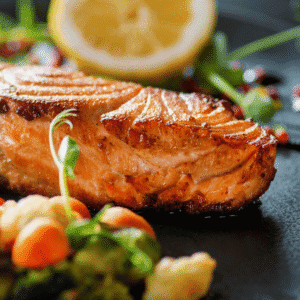
| Wild salmon (3 oz) | 22g | Protein plus anti-inflammatory omega-3s |
| Organic Greek yogurt (1 cup) | 20g | Casein and whey, probiotics, calcium |
| Organic chicken breast (3 oz) | 26g | Lean, high-leucine protein |
| Organic cottage cheese (1 cup) | 24g | Slow-digesting casein, ideal before bed |
| Lentils (1 cup cooked) | 18g | Plant protein, fiber, iron |
| Organic whey protein (1 scoop) | 24g | Fastest-absorbing, highest leucine |
| Organic pea protein (1 scoop) | 25g | Best plant-based option, high iron |
Our detailed guides cover the top sources: grass-fed beef nutrition, organic eggs nutrition, organic salmon nutrition, organic Greek yogurt, organic cottage cheese, and organic whey protein. For plant-based lifters, our organic pea protein guide and lentils complete protein guide cover building muscle without animal products.
The Leucine Threshold: Why It Matters
Total daily protein is the foundation, but there is a second variable that separates good muscle-building nutrition from great: leucine.
Leucine is the branched-chain amino acid that directly activates the mTOR pathway, the molecular switch that initiates muscle protein synthesis. Research identifies a leucine threshold of roughly 2 to 3 grams per meal as the amount needed to maximally trigger muscle building at that eating occasion.
This is why protein distribution matters. A meal containing 30 to 40 grams of quality protein typically delivers the 2 to 3 grams of leucine needed to cross the threshold. Spreading your protein across three to four such meals produces better muscle growth than eating the same total in one or two large servings.
Animal proteins and whey are naturally highest in leucine. Plant proteins contain less per gram, which is why plant-based lifters benefit from slightly larger servings. Our BCAAs in food guide covers leucine content across organic foods in detail, and our whey protein vs plant protein guide covers how the two compare for muscle building.
Protein Timing and Distribution
The research on protein timing has matured. The old idea of a narrow post-workout “anabolic window” has been replaced by a more practical understanding: total daily protein and even distribution matter most.
Distribute evenly. Aim for three to four meals of 30 to 40 grams of protein each, spaced through the day. This keeps muscle protein synthesis elevated across more of the 24-hour cycle than concentrating protein in one or two meals.
Post-workout still counts. Consuming 30 to 40 grams of protein within a couple of hours of training supports recovery and growth. The window is wider than once believed, but training nutrition remains valuable.
Before bed. A slow-digesting protein like organic cottage cheese or Greek yogurt before sleep provides a sustained amino acid supply overnight, when much of muscle repair happens. The casein in these foods is ideal for this purpose.
For practical post-workout meal and smoothie ideas, our organic drinks and mocktails recipes guide has combinations that pair protein with recovery carbohydrates.
Beyond Protein: The Supporting Nutrition
Muscle building is not only about protein. Several other nutritional factors drive growth.
Carbohydrates fuel training. Organic whole-grain carbs like oats, quinoa, and sweet potatoes replenish muscle glycogen and fuel hard training sessions. Carbohydrates also have a protein-sparing effect, allowing protein to be used for building rather than energy. Our organic quinoa nutrition guide and organic oats guide cover quality carbohydrate sources.
Healthy fats support hormones. Testosterone, the primary muscle-building hormone, is made from cholesterol, so adequate dietary fat is essential. Organic eggs, grass-fed beef, olive oil, avocados, and nuts supply the fat testosterone production requires. Our foods that naturally boost testosterone guide covers the hormone-nutrition connection.
Micronutrients enable growth. Zinc and magnesium support testosterone and recovery, and vitamin D supports muscle function. Deficiencies in any of these limit muscle-building potential. Our zinc deficiency guide and vitamin D food sources guide cover these critical cofactors.
Creatine from food. Creatine, one of the most effective muscle-building compounds, is found naturally in red meat and fish. Grass-fed beef and wild salmon supply dietary creatine alongside their protein.
A Sample Organic Muscle-Building Day
Here is how the principles come together for an 85 kg man targeting roughly 160 grams of protein:
| Meal | Organic Foods | Protein |
|---|---|---|
| Breakfast | 3 eggs + Greek yogurt + oats with berries | ~35g |
| Lunch | Grass-fed beef + quinoa + vegetables | ~40g |
| Post-workout | Organic whey or pea protein shake with banana | ~30g |
| Dinner | Wild salmon + sweet potato + leafy greens | ~35g |
| Before bed | Organic cottage cheese | ~24g |
This pattern delivers roughly 160 grams of high-quality protein, each meal crossing the leucine threshold, alongside the carbohydrates, fats, and micronutrients that support growth. It is built entirely from organic whole foods. For meal-planning structure, our 21-day organic meal plan guide provides a framework you can adapt for muscle building.
Why Organic Matters for Muscle Building
Choosing organic for muscle-building foods delivers specific advantages beyond general nutrition.
Organic grass-fed beef provides more omega-3 fatty acids and conjugated linoleic acid than grain-fed, alongside the same protein, while eliminating synthetic hormones and antibiotics. Our organic vs grass-fed meat guide covers the difference.
Organic protein powders avoid the contamination concerns found in conventional products. A 2025 Clean Label Project study found many protein powders exceeded safe heavy metal limits, making third-party-tested organic options the safer choice. Our organic protein powders guide covers how to choose a clean product.
And because hard training raises your food intake substantially, choosing organic reduces the cumulative pesticide and additive load that comes with eating large volumes of food daily. For the foundational case, our health benefits of eating organic guide covers the full picture.
FAQs
Q1: Can you build muscle on an organic diet?
Yes, absolutely. Muscle is built from protein, adequate calories, and resistance training, all of which organic whole foods provide better than processed alternatives. Organic grass-fed beef, eggs, wild salmon, Greek yogurt, lentils, and clean organic protein powder supply all the complete protein and leucine muscle growth requires, plus the micronutrients and healthy fats that support it, without the hormones, antibiotics, or contaminants in conventional options.
Q2: How much protein do I need to build muscle?
Research supports 1.6 to 2.2 grams of protein per kilogram of bodyweight daily for building muscle. A 2021 meta-analysis found muscle gains increased with protein intake up to about 1.6 g/kg, and the International Society of Sports Nutrition recommends 1.4 to 2.0 g/kg for active individuals. For an 80 kg (176 lb) man, that is roughly 128 to 176 grams of protein per day, best distributed across three to four meals.
Q3: What are the best organic foods for building muscle?
The top organic muscle-building foods are grass-fed beef (26g protein per 3 oz, plus creatine and zinc), organic eggs (18g per 3 eggs), wild salmon (22g plus omega-3s), organic Greek yogurt (20g per cup), chicken breast (26g per 3 oz), cottage cheese (24g per cup, ideal before bed), and lentils (18g per cup) for plant-based eaters. Organic whey or pea protein powder adds convenient high-leucine protein.
Q4: Do I need protein powder to build muscle?
No. Protein powder is convenient but not required. You can hit your protein targets entirely from whole organic foods like meat, eggs, fish, dairy, and legumes. Protein powder simply makes it easier to reach higher targets, especially post-workout or for busy men. If you do use it, choose a clean, third-party-tested organic option, since a 2025 Clean Label Project study found many conventional powders exceeded safe heavy metal limits.
Q5: How should I time my protein for muscle growth?
Distribute protein across three to four meals of 30 to 40 grams each, spaced through the day. Each meal of this size crosses the leucine threshold (2 to 3 grams) that triggers muscle protein synthesis, keeping it elevated across more of the day than one or two large meals would. A post-workout meal within a couple of hours of training and a slow-digesting protein like cottage cheese before bed both support growth.
Q6: What is the leucine threshold?
Leucine is the amino acid that activates muscle protein synthesis through the mTOR pathway. Research shows roughly 2 to 3 grams of leucine per meal is needed to maximally trigger muscle building at that eating occasion. A meal with 30 to 40 grams of quality protein typically delivers this. Animal proteins and whey are highest in leucine; plant proteins contain less, so plant-based lifters benefit from slightly larger servings.
Q7: Can you build muscle on a plant-based organic diet?
Yes. Plant-based lifters can build muscle effectively with organic lentils, beans, quinoa, tofu, tempeh, and pea protein. The main adjustments are eating slightly more total protein (since plant proteins are less leucine-dense and slightly less digestible) and combining sources for complete amino acid coverage. Organic pea protein is the most practical plant-based powder for reliably hitting the leucine threshold per serving.
Q8: Do I need to eat more calories to build muscle?
Yes, building new muscle tissue requires energy, so most men need a slight calorie surplus of roughly 10 to 20% above maintenance. The key is getting those extra calories from quality organic whole foods rather than empty processed calories. A modest surplus combined with adequate protein and progressive resistance training produces lean muscle gain with minimal fat gain.
The Bottom Line
Building muscle on an organic diet is not only possible, it is arguably superior to relying on processed bodybuilding foods. The formula is straightforward: eat 1.6 to 2.2 grams of protein per kilogram of bodyweight daily, distribute it across three to four meals that each cross the leucine threshold, maintain a slight calorie surplus from quality whole foods, and train with progressive resistance.
Organic whole foods deliver the complete protein, leucine, healthy fats, carbohydrates, and micronutrients that muscle growth requires, while eliminating the hormones, antibiotics, and contaminants found in conventional and heavily processed alternatives. Grass-fed beef, organic eggs, wild salmon, Greek yogurt, lentils, and clean organic protein powder are all the tools you need.
For the complete men’s nutrition framework that ties muscle building together with testosterone, heart, and overall health, our guides on organic foods for men over 40 and high-protein organic foods cover the full picture.