Some nutrients get all the attention. Vitamin D dominates the headlines. Magnesium has become a wellness staple. Meanwhile, vitamin B6 sits quietly in the background, running more than 140 enzymatic reactions in your body.
Several of those reactions decide how your hormones behave.
B6 helps regulate how strongly your cells respond to estrogen. It builds the serotonin that steadies your mood. It supports the luteal phase of your cycle and influences prolactin through dopamine.
This guide explains the vitamin B6-hormones connection in plain terms, then shows you exactly which organic B6 foods deliver enough.
What Vitamin B6 Actually Does
Vitamin B6 is a family of six related compounds. Your body converts them into one active form called pyridoxal 5′-phosphate, or PLP.
PLP is a coenzyme. It attaches to enzymes and makes reactions possible that would otherwise stall.
Its main jobs include:
- Building neurotransmitters, including serotonin, dopamine, and GABA
- Clearing homocysteine from the blood alongside folate and B12
- Releasing stored glucose when blood sugar dips
- Producing haemoglobin
- Modulating steroid hormone receptor activity
That last item is where hormone balance begins.
Vitamin B6 and Hormone Regulation
Here is the mechanism most articles skip.
PLP binds directly to steroid hormone receptor complexes inside your cells. Estrogen, progesterone, testosterone, and cortisol all work through these receptors.
When PLP binds, it dampens the receptor’s ability to switch on gene transcription. In practical terms, B6 acts like a volume control on hormone signalling.
Low B6 means the volume stays high. Your cells respond more strongly to the same amount of circulating hormone.
Adequate B6 keeps the response measured.
| Hormone Pathway | What B6 Contributes | Practical Effect |
|---|---|---|
| Estrogen signalling | Dampens receptor gene transcription | Steadier response to circulating estrogen |
| Estrogen clearance | Supports liver detoxification pathways | Helps the body process and remove estrogen |
| Progesterone and luteal phase | Supports hormone synthesis cofactors | May support the second half of the cycle |
| Prolactin | Raises dopamine, which suppresses prolactin | Linked to reduced breast tenderness |
| Cortisol | Modulates glucocorticoid receptor activity | Buffers the stress response |
| Serotonin and GABA | Required cofactor for synthesis | Mood and sleep stability |
B6 and Estrogen
The relationship runs in both directions, which is worth knowing.
B6 influences how your tissues respond to estrogen. At the same time, higher estrogen levels increase your demand for B6.
Estrogen accelerates the kynurenine pathway, which burns through B6 as tryptophan gets metabolized. Research from the 1970s onwards found lower B6 status in women taking older high-dose oral contraceptives for exactly this reason.
Modern low-dose formulations have a smaller effect. The principle still holds. Higher estrogen exposure raises your B6 requirement.
Your liver also needs B6 to help process estrogen for removal. Support that system with fiber and cruciferous vegetables, and the wider approach in our guide to organic food and hormonal balance becomes more effective.
B6, Prolactin, and Breast Tenderness
Dopamine is the body’s natural brake on prolactin. B6 is required to make dopamine.
When B6 runs low, dopamine production suffers, and prolactin drifts upward. Elevated prolactin contributes to breast tenderness, cycle irregularity, and low mood.
This is one of the clearest routes from a single nutrient to a symptom people actually notice.
Vitamin B6 and Serotonin
Your body makes serotonin from tryptophan, an amino acid found in protein foods.
The final step in that conversion depends on a PLP-dependent enzyme. Without enough B6, tryptophan gets diverted down the kynurenine pathway instead of becoming serotonin.
The same applies to GABA, your primary calming neurotransmitter. The enzyme that produces it also requires PLP.
So B6 sits at the junction between hormone shifts and mood shifts. That overlap explains why premenstrual mood symptoms respond to it more reliably than physical ones.
Vitamin B6 and PMS
The evidence here is reasonable, though not overwhelming.
A systematic review published in the BMJ pooled multiple randomized trials and found B6 more effective than placebo for premenstrual symptoms, with the strongest signal for mood-related complaints such as irritability and low mood.
The Royal College of Obstetricians and Gynaecologists has listed B6 among options for premenstrual syndrome, typically at modest doses.
Two practical points matter.
First, magnesium and B6 appear to work better together than either alone. Several trials pair them deliberately. Load up on organic nuts and seeds to cover both.
Second, food-level intake is the sensible starting point. High-dose supplementation carries real risk, which we cover below. Our full guide to organic foods for PMS puts B6 in the context of the whole diet.
How Much Vitamin B6 Do You Need?
| Group | Daily Requirement |
|---|---|
| Adults 19 to 50 | 1.3 mg |
| Women 51 and over | 1.5 mg |
| Men 51 and over | 1.7 mg |
| Pregnancy | 1.9 mg |
| Breastfeeding | 2.0 mg |
| Upper limit (adults) | 100 mg |
These numbers are small. A single serving of chickpeas covers most of a day’s requirement.
Deficiency is uncommon in people eating varied diets. Marginal status is more common, particularly among people with higher estrogen exposure, heavy alcohol use, or inflammatory conditions.
Best Organic B6 Foods
| Food (serving) | Vitamin B6 (mg) | Percent of Daily Need |
|---|---|---|
| Chickpeas, cooked, 1 cup | 1.1 | 85% |
| Tuna, cooked, 3 oz | 0.9 | 69% |
| Salmon, cooked, 3 oz | 0.6 | 46% |
| Chicken breast, 3 oz | 0.5 | 38% |
| Potato, cooked, 1 cup | 0.4 | 31% |
| Sunflower seeds, 1 oz | 0.4 | 31% |
| Banana, 1 medium | 0.4 | 31% |
| Avocado, 1 whole | 0.4 | 31% |
| Pistachios, 1 oz | 0.3 | 23% |
| Spinach, cooked, 1 cup | 0.4 | 31% |
| Sweet potato, 1 cup | 0.3 | 23% |
| Turkey, 3 oz | 0.4 | 31% |
Chickpeas lead the list by a wide margin, and they cost very little. Our guide to organic chickpeas covers dried versus canned and how to prepare them properly.
Fish delivers B6 alongside omega-3 fats and vitamin D, which supports hormone balance from a second direction. Check our organic fish buying guide for sourcing, and pair it with the options in our roundup of vitamin D food sources.
Poultry contributes steadily across the week. Whether the certified version justifies the price is a fair question, and we answered it in is organic chicken worth it.
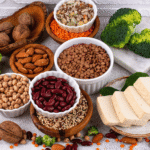
For plant-based eaters, lentils and beans do the heavy lifting alongside seeds. A daily banana and half an avocado close most of the remaining gap without any planning.
What Depletes Vitamin B6
| Depleter | Mechanism | What To Do |
|---|---|---|
| High estrogen exposure | Accelerates tryptophan catabolism | Raise dietary B6 intake |
| Alcohol | Damages PLP and increases excretion | Reduce intake |
| Low riboflavin (B2) | B2 converts B6 into active PLP | Eat eggs, dairy, almonds, mushrooms |
| Chronic inflammation | Lowers circulating PLP | Address the underlying driver |
| Overcooking and boiling | B6 is heat- and water-sensitive. | Steam, roast, or reuse cooking liquid |
| Highly refined diets | Milling strips B6 from grains | Choose whole grains |
Riboflavin deserves a mention. You can eat plenty of B6 and still fall short of the active form if B2 runs low. Organic eggs and mushrooms cover it easily.
Zinc also supports hormone production and often runs low alongside B vitamins. Our guide to zinc deficiency explains the warning signs.
Cooking Without Losing B6
Vitamin B6 is water-soluble and sensitive to heat and light. Cooking losses range from 20 to 50 percent depending on method.
Boiling is the worst offender because B6 leaches into the water. Steaming, roasting, and stir-frying retain far more.
Canning reduces B6 substantially. Frozen vegetables hold it better, as explained in our comparison of frozen versus fresh nutrition.
Simple fix: when you boil pulses or vegetables, use the liquid in a soup or sauce rather than pouring it down the sink.
Does Organic Matter for B6?
The honest answer is nuanced.
No strong evidence shows that organic chickpeas contain more B6 than conventional ones dramatically. Vitamin content depends mostly on the crop, the variety, and how fresh it is. Some studies find modest nutrient differences in organic produce, as covered in our review of organic versus conventional nutrient differences.
The stronger organic argument for hormone health sits elsewhere.
Certain pesticides act as endocrine disruptors, meaning they interfere with hormone signaling directly. Choosing organic reduces your exposure to that category of residue. When the goal is hormone balance specifically, cutting an interfering input matters as much as adding a helpful nutrient.
Understanding the standards helps you spend wisely, and our explainer on what makes food organic covers the labels.
Signs You May Be Running Low
Marginal B6 status rarely announces itself clearly. Common signals include:
- Low mood or irritability that tracks with your cycle
- Cracked or sore corners of the mouth
- Tingling in hands or feet
- Poor sleep despite adequate hours
- Frequent premenstrual breast tenderness
None of these confirm a deficiency on their own. They simply justify a closer look at your intake.
A Day That Covers Your B6
| Meal | Foods | Approx. B6 |
|---|---|---|
| Breakfast | Eggs, spinach, half an avocado | 0.6 mg |
| Lunch | Chickpea salad with sunflower seeds | 1.2 mg |
| Snack | Banana and pistachios | 0.7 mg |
| Dinner | Salmon with roasted sweet potato | 0.9 mg |
That comfortably exceeds the daily requirement while supplying magnesium, zinc, and riboflavin at the same time. Whole foods deliver cofactors together, which is exactly how these pathways function.
A Word on Supplements
This part matters.
Vitamin B6 is the one B vitamin with a well-documented toxicity ceiling. Long-term intake above 100 mg per day can cause peripheral neuropathy, meaning nerve damage that produces numbness and tingling in the hands and feet.
Cases have been reported at lower doses with prolonged use. The symptoms usually improve after stopping, though recovery can take months.
Food sources carry no such risk. If you are considering a supplement, discuss the dose with a healthcare professional first. Our comparison of supplements versus whole foods covers when a pill genuinely adds value.
The Bottom Line
Vitamin B6 works as a regulator rather than a booster. It moderates how loudly your cells hear estrogen. It builds the serotonin and dopamine that steady mood. It supports the liver work that clears hormones once they have done their job.
Requirements are small, and ordinary food meets them. Chickpeas, fish, poultry, bananas, avocados, seeds, and potatoes cover the whole range.
Cook gently, keep alcohol moderate, and pair B6 with magnesium and riboflavin. Skip the high-dose supplements unless a professional recommends them.
Women navigating perimenopause face shifting requirements across several nutrients at once, and our guide to organic foods for women over 40 maps out the full picture.
FAQs
How does vitamin B6 affect hormones?
B6 binds to steroid hormone receptors and dampens their gene transcription. It acts like a volume control on estrogen, progesterone, and cortisol signaling.
Does vitamin B6 lower estrogen?
Not directly. It reduces how strongly cells respond to estrogen and supports the liver pathways that clear it.
Which foods are highest in vitamin B6?
Chickpeas lead the list at 1.1 mg per cup. Tuna, salmon, chicken, potatoes, sunflower seeds, bananas, and avocado follow.
Does vitamin B6 help with PMS?
Pooled trial evidence shows a modest benefit, strongest for mood symptoms such as irritability and low mood. It appears to work better paired with magnesium.
How much vitamin B6 do I need daily?
Adults aged 19 to 50 need 1.3 mg. Women over 50 need 1.5 mg, men over 50 need 1.7 mg, and pregnancy raises it to 1.9 mg.
Can you take too much vitamin B6?
Yes. Long-term intake above 100 mg daily can cause peripheral nerve damage. Food sources carry no such risk.
Does vitamin B6 increase serotonin?
It is required for the final step of converting tryptophan into serotonin. Without it, tryptophan diverts down another pathway.
Do birth control pills deplete B6?
Higher estrogen exposure increases B6 demand by speeding tryptophan breakdown. Older high-dose formulations had the strongest effect.
Do organic foods contain more B6?
Not significantly. The stronger organic argument is reduced exposure to pesticides that act as endocrine disruptors.
Does cooking destroy vitamin B6?
Boiling loses 20 to 50 percent because B6 is water-soluble. Steam or roast instead, or reuse the cooking liquid.