

Most people think of oranges when they think of vitamin C. That association undersells the full picture considerably. A single red bell pepper contains nearly three times more vitamin C than a medium orange. A half-cup of acerola cherries delivers over 800 milligrams, compared to the 70 milligrams in a typical orange.
Vitamin C is among the most studied nutrients in human health research, with roles in immune function, collagen synthesis, iron absorption, and antioxidant defense. Getting it from whole foods also delivers bioflavonoids, fiber, and co-factors that influence how the vitamin is absorbed and used. This guide covers the best natural vitamin C food sources, how food-based vitamin C compares to supplements, how cooking affects content, and the practical daily strategy for hitting your needs.
Why Vitamin C Matters
Vitamin C (ascorbic acid) is an essential water-soluble vitamin. The human body cannot synthesize it, which means dietary intake is the only source. The RDA is 65 to 90 mg per day for adults, with an upper tolerable limit of 2,000 mg per day.
The main functions vitamin C supports:
- Collagen production: Required for skin integrity, wound healing, cartilage, and blood vessels
- Immune support: Stimulates production and function of white blood cells; high concentrations found in immune cells
- Antioxidant activity: Neutralizes free radicals that damage cells and DNA
- Iron absorption: Converts non-heme iron (plant-based) to a more absorbable form
- Neurotransmitter synthesis: Required for production of norepinephrine and serotonin precursors
Deficiency causes scurvy, marked by fatigue, bleeding gums, and slow wound healing. While clinical scurvy is rare in developed countries, suboptimal intake is more common than recognized. A 2023 survey found roughly 18% of US adults fell below minimum thresholds despite moderate dietary variety. Our guide on Organic Diet and Immunity covers how vitamin C-rich foods support overall immune defense.
Top Natural Vitamin C Food Sources
Based on USDA FoodData Central 2024 data, the following foods rank highest for vitamin C content:
| Food | Serving Size | Vitamin C (mg) | % Daily Value |
|---|---|---|---|
| Acerola cherries (raw) | 1/2 cup (49g) | 822 mg | 913% |
| Kakadu plum (powder) | 1 tsp (3g) | ~300 mg | 333% |
| Guava (raw) | 1 medium (55g) | 125 mg | 139% |
| Yellow bell pepper | 1 medium (186g) | 341 mg | 379% |
| Red bell pepper | 1 medium (119g) | 152 mg | 169% |
| Blackcurrants | 1/2 cup (56g) | 101 mg | 112% |
| Kiwifruit | 1 medium (75g) | 64 mg | 71% |
| Broccoli (raw) | 1 cup chopped (91g) | 81 mg | 90% |
| Brussels sprouts (cooked) | 1/2 cup (78g) | 48 mg | 53% |
| Strawberries (raw) | 1 cup (152g) | 89 mg | 99% |
| Orange (raw) | 1 medium (131g) | 70 mg | 78% |
| Papaya (raw) | 1 cup cubed (145g) | 87 mg | 97% |
| Cauliflower (raw) | 1 cup (107g) | 52 mg | 58% |
| Mango (raw) | 1 cup (165g) | 60 mg | 67% |
| Pineapple (raw) | 1 cup chunks (165g) | 79 mg | 88% |
| Organic kale (raw) | 1 cup (67g) | 80 mg | 89% |
Source: USDA FoodData Central 2024. Daily Value based on 90 mg (FDA reference).
The Surprising Leaders: Beyond Oranges
Bell Peppers
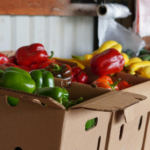
Bell peppers are the most practical high-volume vitamin C source in most grocery stores. Red peppers deliver about 152 mg per medium pepper. Yellow peppers go even higher, at roughly 341 mg per pepper (380% of the daily value). Green peppers, which are unripe versions of the same plant, contain less at around 80 mg because vitamin C content increases as peppers ripen.
The fact that peppers are commonly eaten raw in salads and snacks preserves most of their vitamin C content. A half-cup of raw red pepper strips provides more than enough vitamin C for the day with almost no calories.
Kiwifruit
Kiwifruit provides 64 to 93 mg per fruit depending on variety. A 2013 University of Otago randomized controlled trial found kiwifruit-derived vitamin C raised plasma and tissue ascorbate levels significantly, with the whole fruit showing synergistic effects beyond an equivalent isolated supplement dose. Our Kiwi guide covers the full organic kiwifruit profile.
Guava
A single medium guava provides 125 mg of vitamin C (around 139% of the daily value). Guava is also rich in the antioxidant lycopene and dietary fiber, making it one of the most nutritionally efficient fruits available. It is widely available fresh and frozen, and the vitamin C content remains relatively stable in ripe, fresh fruit.
Strawberries and Berries
One cup of raw organic strawberries delivers around 89 mg of vitamin C, nearly a full daily value in a single snack. Blackcurrants are more concentrated, with 112% of the daily value in a half-cup. Both also deliver quercetin, anthocyanins, and ellagic acid that amplify antioxidant defense. Our Organic Strawberries guide covers the EWG Dirty Dozen implications for strawberries specifically.
Cruciferous Vegetables
Broccoli, Brussels sprouts, cauliflower, and kale all deliver meaningful vitamin C alongside fiber, sulforaphane, and glucosinolates. Raw broccoli provides 81 mg per cup; cauliflower delivers 52 mg per cup. These make vegetables a practical vitamin C source year-round, particularly in winter. Our Cauliflower guide covers organic buying and variety tips.
Papaya and Mango
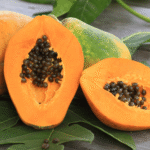
Papaya provides 87 mg of vitamin C per cup alongside papain, beta-carotene, and lycopene. Mango contributes 60 mg per cup plus mangiferin, a xanthone with documented anti-inflammatory properties. Both are Clean Fifteen items with low pesticide residue risk. Our Papaya and Mango guides cover nutritional detail and seasonal buying.
Natural Vitamin C vs. Supplements: What the Research Shows
The core chemistry is identical. Ascorbic acid in a supplement is the same molecule as in a bell pepper or kiwifruit, and studies confirm comparable bioavailability between natural and synthetic forms.
However, a 2025 randomized crossover trial in Nutrients found that whole foods and fresh juice elevated plasma vitamin C and showed effects on antioxidant activity and amino acid metabolism pathways that the supplement alone did not replicate.
The practical case for whole-food vitamin C over supplements rests on three points:
1. Bioflavonoid co-factors. Whole foods deliver bioflavonoids including quercetin, hesperidin, and rutin alongside vitamin C. Research shows these compounds influence vitamin C tissue retention and recycling, providing benefits that isolated ascorbic acid cannot replicate.
2. Absorption ceiling. Your body’s absorption of vitamin C drops sharply when you take more than 200 mg at a time. Most of the excess is flushed out in urine. Whole foods naturally distribute vitamin C across meals in smaller, more efficiently absorbed amounts.
3. Broader nutritional matrix. A red bell pepper delivering 150 mg of vitamin C also provides vitamin B6, folate, potassium, fiber, and carotenoids. A supplement delivers only the isolated molecule.
Supplements are appropriate when dietary intake is consistently insufficient, during illness (when demand increases), or for specific clinical protocols. For healthy adults eating diverse whole foods, supplements are generally unnecessary. Our guides on Health Benefits of Eating Organic and Top Superfoods cover the broader evidence for whole-food nutrient delivery.
How Cooking Affects Vitamin C Content
Vitamin C is one of the most heat-sensitive nutrients. Understanding how preparation methods affect content helps you preserve more of what you eat.
| Cooking Method | Vitamin C Retention | Notes |
|---|---|---|
| Raw / uncooked | 100% | Best for fruits and most vegetables |
| Steaming (short, 3-5 min) | 70 to 90% | Best cooking method for vitamin C retention |
| Microwaving (short) | 75 to 85% | Comparable to steaming for most vegetables |
| Boiling (water discarded) | 40 to 60% | Significant losses into cooking water |
| Boiling (water retained as stock) | 70 to 80% | Better retention when liquid is consumed |
| Roasting / baking | 50 to 70% | Dry heat causes moderate losses |
| Deep frying | 30 to 50% | High heat destroys substantial amounts |
Practical tips for preserving vitamin C:
- Eat raw wherever possible: peppers, kiwi, strawberries, and citrus need no cooking
- Steam rather than boil vegetables; use minimal water and cook briefly
- Store produce in the refrigerator and consume within 3 to 5 days; vitamin C degrades on exposure to air and light
- Cut produce just before eating; surface area exposure increases oxidation
- Avoid soaking cut vegetables in water before cooking
Vitamin C and Organic Produce
Organic produce consistently shows higher polyphenol content than conventional equivalents, though the relationship with vitamin C specifically is more variable. Where organic choice definitively matters for vitamin C foods is pesticide residue. Strawberries, kale, and bell peppers rank on or near the EWG 2026 Dirty Dozen. Buying these specific items organic reduces residue exposure without compromising vitamin C content.
For the full EWG framework and which produce items to prioritize organic, our Dirty Dozen and Clean Fifteen guide is the practical reference. For budget-conscious organic buying, our Shop Organic on a Budget guide shows exactly where to prioritize your organic spend.
Daily Strategy: Meeting Your Vitamin C Needs from Food
The RDA of 65 to 90 mg is easy to meet from whole foods. Each of these single-food or two-food combinations covers a full daily value:
- 1/2 cup raw red bell pepper strips: 95 mg
- 1 medium kiwifruit + 1/2 cup strawberries: 145 mg combined
- 1 cup raw broccoli florets + 1/2 cup papaya: 124 mg combined
- 1/2 cup guava: 125 mg
Most adults eating three to five daily servings of mixed fruits and vegetables will easily exceed the RDA without tracking. Diversity across the food list above matters more than any single source. The 21-Day Organic Meal Plan integrates high-vitamin C produce across all meals.
FAQs
Q1: Which food has the most vitamin C? Acerola cherries top the list with around 822 mg per half-cup, over 900% of the daily value. Among widely available foods, yellow bell peppers deliver around 341 mg per pepper, red bell peppers around 152 mg, and guava around 125 mg per fruit. Oranges, commonly associated with vitamin C, provide around 70 mg per medium fruit.
Q2: Is vitamin C from whole foods better than supplements? Chemically identical, but functionally different. Whole foods deliver vitamin C alongside bioflavonoids, fiber, and phytonutrients that influence how vitamin C is absorbed, retained, and used in tissue. A 2025 randomized trial in Nutrients found whole-food and juice sources showed effects on antioxidant activity and amino acid metabolism that supplements alone did not replicate. For most healthy adults, whole foods are the more complete option.
Q3: How much vitamin C do I need per day? The RDA is 65 to 90 mg per day for adults. Smokers need an additional 35 mg daily due to increased oxidative stress. The upper tolerable limit is 2,000 mg per day. Most adults eating three to five servings of mixed fruits and vegetables daily will meet or exceed the RDA comfortably without supplements or tracking.
Q4: Does cooking destroy vitamin C? Significantly, yes. Boiling with discarded water retains only 40 to 60% of vitamin C. Steaming for 3 to 5 minutes retains 70 to 90%. Microwaving briefly is comparable to steaming. Eating vegetables raw preserves the full content. Where cooking is necessary, use minimal water, cook briefly, and consume cooking liquid where possible.
Q5: Do bell peppers have more vitamin C than oranges? Yes, significantly. A medium red bell pepper contains around 152 mg of vitamin C, more than double the 70 mg in a medium orange. A medium yellow bell pepper contains roughly 341 mg, nearly five times an orange. Bell peppers eaten raw, such as in salads or as snack strips, deliver their full vitamin C content with minimal caloric cost.
Q6: Should I buy organic for vitamin C-rich foods? For specific items, yes. Strawberries, kale, and bell peppers appear on or near the EWG 2026 Dirty Dozen for pesticide residue. Buying these organic reduces residue exposure without affecting vitamin C content. For Clean Fifteen items like papaya, mango, and kiwi, conventional is generally lower risk. Our Dirty Dozen and Clean Fifteen guide covers the full list.
Q7: Can I get enough vitamin C from vegetables alone, without fruit? Yes. One cup of raw broccoli provides 90% of the daily value. Half a cup of raw red bell pepper strips exceeds it. Brussels sprouts, cauliflower, and kale all contribute meaningful amounts. A diet with daily servings of cruciferous vegetables and bell peppers easily meets vitamin C needs without any fruit, which is useful for those following low-sugar or low-fructose diets.
Q8: What reduces vitamin C absorption? Smoking, chronic alcohol use, and high stress all increase vitamin C depletion. Megadosing supplements above 200 mg at once results in significantly reduced absorption, with excess flushed in urine. Cooking in large volumes of water without consuming the liquid wastes substantial amounts. Storing cut produce exposed to air and light accelerates oxidative breakdown before consumption.
The Bottom Line
Vitamin C from whole foods delivers more than the isolated molecule. The bioflavonoids, fiber, and phytonutrients present in bell peppers, kiwifruit, strawberries, guava, and cruciferous vegetables enhance how vitamin C is absorbed, retained, and used in the body.
The dietary target is achievable without supplementation for most healthy adults. A half-cup of raw red pepper strips or a single kiwifruit covers the daily requirement in one snack. Building variety across fruits and vegetables throughout the day ensures consistent intake and the co-factor support that a supplement alone cannot provide.
For more on building an organic diet that supports collagen production, immune function, and long-term health, our guide on Organic Food and Hormonal Balance covers the nutrient interaction picture in full.






[…] Natural vitamin C food sources come packaged with bioflavonoids enhancing absorption. Orange supplements lack these cofactors. The fruit delivers complete nutrition. The pill delivers incomplete isolation. […]