

Leucine, the most critical of the three branched-chain amino acids, directly activates the mTOR signaling pathway that triggers muscle protein synthesis, yet most people chasing this effect spend money on supplements when whole organic foods deliver the same leucine at a fraction of the cost and with a full nutritional matrix supplements cannot replicate.
The BCAA supplement industry is worth billions annually, built on the premise that isolated leucine, isoleucine, and valine produce unique muscle-building effects. The research is more nuanced than the marketing. A 2024 comprehensive review published in the journal Amino Acids confirmed that BCAAs have essential roles in protein synthesis, metabolic regulation, and energy production, but also noted that dietary protein providing all essential amino acids produces a superior anabolic response compared to isolated BCAAs alone. Whole food wins.
This guide covers exactly what BCAAs are, what each one does, the best organic whole-food sources ranked by leucine content, how to structure meals to hit the leucine threshold for muscle protein synthesis, and why whole-food BCAAs consistently outperform their supplemental equivalents.
BCAAs (branched-chain amino acids) are three essential amino acids: leucine, isoleucine, and valine. They must come from food because the body cannot synthesize them. The best whole-food sources are organic chicken breast, wild-caught salmon, organic grass-fed beef, organic eggs, organic Greek yogurt, organic edamame, and organic lentils. Leucine is the most critical BCAA for muscle protein synthesis. A meal providing 2 to 3 grams of leucine maximally stimulates muscle building in most adults.
What Are BCAAs? The Science Without the Marketing
BCAAs are three of the nine essential amino acids. Their name refers to their molecular structure: each has a side chain that branches off the central carbon atom rather than forming a straight chain. This structural difference is not merely chemical trivia. It determines how they are metabolized.
Unlike most amino acids that are processed in the liver, BCAAs bypass hepatic metabolism and are catabolized directly in skeletal muscle tissue. This means they are available rapidly for muscle protein synthesis and as an energy source during exercise.
The three BCAAs and their primary roles:
Leucine is the most studied and most functionally significant. It directly activates the mTOR (mammalian target of rapamycin) signaling pathway, the primary molecular switch for muscle protein synthesis. Research published in PubMed confirms BCAAs, particularly leucine, have anabolic effects on protein metabolism by increasing the rate of protein synthesis and decreasing protein degradation in resting human muscle. A leucine threshold of approximately 2 to 3 grams per meal is required to maximally stimulate muscle protein synthesis.
Isoleucine supports glucose uptake into muscle cells during and after exercise, contributes to hemoglobin synthesis, and supports immune function through modulation of T-cell activity. It works synergistically with leucine rather than independently driving anabolic signaling.
Valine maintains nitrogen balance, supports mental focus during endurance activity, and provides energy substrate for muscle tissue during prolonged exercise when glycogen is depleted.
Together, the three BCAAs account for approximately 35 to 40% of all essential amino acids in human muscle protein, which is why their dietary adequacy is directly linked to muscle maintenance and recovery capacity.
Why Whole-Food BCAAs Outperform Supplements
This is the most important practical message in BCAA nutrition, and it runs contrary to what the supplement industry communicates.
A review published in the Journal of the International Society of Sports Nutrition found that the maximal stimulation of muscle protein synthesis in response to BCAAs alone is limited because the other essential amino acids required for synthesis of new protein can only be derived from muscle protein breakdown when only isolated BCAAs are consumed. In other words, taking isolated BCAA supplements without the full spectrum of essential amino acids forces your body to cannibalize existing muscle protein to supply the missing building blocks.
Whole-food protein sources contain all nine essential amino acids. When you eat organic chicken breast, organic eggs, or wild-caught salmon, you deliver leucine, isoleucine, and valine alongside the complete amino acid matrix required to actually build new muscle protein rather than recycling existing tissue.
The 2024 Amino Acids journal review confirmed that dietary protein providing all essential amino acids produces a superior anabolic response compared to BCAAs in isolation. Complete protein from organic whole food sources has been the evidence-based answer all along.
This does not mean BCAA supplements are useless in every context. They may provide practical benefit during prolonged fasted exercise or in clinical situations where total protein intake is restricted. But for anyone eating adequately, whole-food protein is always the more effective and more complete intervention.
For the full comparison of complete protein sources and how they rank on leucine delivery and muscle-building evidence, our Organic Whey Protein guide and Whey Protein vs Plant Protein guide cover the head-to-head evidence in detail.
Top Organic Whole-Food BCAA Sources
USDA FoodData Central 2024 data. All values per 100g cooked weight unless stated:
| Organic Food | Total BCAAs (per 100g) | Leucine | Isoleucine | Valine |
|---|---|---|---|---|
| Organic whey protein (per 30g scoop) | ~5.5g | ~2.5g | ~1.4g | ~1.6g |
| Organic grass-fed beef (lean) | ~5.5g | ~2.3g | ~1.2g | ~1.5g |
| Organic chicken breast | ~5.2g | ~2.2g | ~1.1g | ~1.3g |
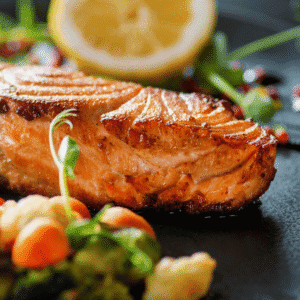
| Wild-caught salmon | ~4.9g | ~2.1g | ~1.0g | ~1.3g |
| Organic pasture-raised eggs (2 large) | ~2.1g | ~1.0g | ~0.5g | ~0.7g |
| Organic Greek yogurt (1 cup) | ~2.8g | ~1.2g | ~0.7g | ~0.9g |
| Organic pea protein (per 30g scoop) | ~4.5g | ~2.0g | ~0.9g | ~1.1g |
| Organic edamame (1 cup cooked) | ~2.3g | ~1.0g | ~0.6g | ~0.8g |
| Organic lentils (1 cup cooked) | ~2.0g | ~0.9g | ~0.5g | ~0.7g |
| Organic quinoa (1 cup cooked) | ~1.6g | ~0.7g | ~0.4g | ~0.5g |
| Organic pumpkin seeds (1 oz) | ~1.8g | ~0.7g | ~0.5g | ~0.5g |
Key pattern in this data: Animal proteins consistently deliver more total BCAAs and higher leucine per gram than plant proteins. However, organic edamame, lentils, quinoa, and pumpkin seeds provide meaningful BCAA contributions for plant-based eaters when consumed in practical meal-sized portions.
Leucine Threshold: The Most Important Number in BCAA Nutrition
Leucine is the master regulator of muscle protein synthesis. Its effect is not linear. Research identifies a leucine threshold of approximately 2 to 3 grams per meal as the amount required to fully activate the mTOR pathway. Below this threshold, muscle protein synthesis is suboptimal. Above it, there is no additional benefit from more leucine until the next meal.
This threshold concept is why meal structure and protein source selection matter more than total daily protein in many practical contexts.
Reaching the leucine threshold from single-meal organic whole-food servings:
- 3 oz organic chicken breast: approximately 2.2g leucine — threshold met
- 3 oz wild-caught salmon: approximately 2.1g leucine — threshold met
- 3 oz organic grass-fed beef: approximately 2.3g leucine — threshold met
- 30g organic whey protein: approximately 2.5g leucine — threshold exceeded
- 1 cup organic Greek yogurt: approximately 1.2g leucine — threshold not met alone; pair with other protein
- 1 cup cooked organic lentils: approximately 0.9g leucine — threshold not met alone
For plant-based eaters, hitting the leucine threshold from a single plant protein source requires strategic combining. Pairing 1 cup of cooked organic lentils with 1 cup of organic quinoa delivers approximately 1.6g leucine combined, still below threshold. Adding 2 tablespoons of organic pumpkin seeds brings the total toward 2.3g. This is why volume and variety matter more for plant-based protein timing than for animal protein.
For plant-based athletes specifically, our Organic Pea Protein guide covers pea protein’s leucine delivery (approximately 2.0g per 30g scoop) and why it is the most practical plant-based way to reliably hit the leucine threshold.
BCAAs and Muscle Recovery
Recovery is where BCAAs earn most of their practical reputation, and the evidence here is genuinely supportive.
During resistance exercise, muscle protein breakdown increases. BCAAs, particularly leucine, shift the net balance toward synthesis during the post-exercise period. Research confirms that during recovery from endurance exercise, BCAAs have documented anabolic effects in human muscle, mediated through phosphorylation of mTOR and activation of downstream kinases (p70 S6 kinase and eIF4E-binding protein 1).
Reducing delayed onset muscle soreness (DOMS) is another documented effect. A 2010 Journal of Nutrition study found that BCAA supplementation before and after exercise significantly reduced muscle soreness 48 and 72 hours post-exercise compared to placebo. The same mechanism applies to dietary BCAAs from whole food: consuming a leucine-adequate meal within two hours of training produces equivalent recovery support.
For practical post-workout meal combinations that deliver leucine alongside other recovery nutrients, our Organic Drinks and Mocktails Recipes guide has smoothie ideas that pair organic whey or pea protein with recovery carbohydrates. Our Organic Greek Yogurt guide covers how yogurt functions as both a BCAA and probiotic recovery food.
BCAAs and Energy During Exercise
The energy contribution of BCAAs is a separate and underappreciated function. During prolonged exercise when glycogen stores are depleted, BCAAs can be oxidized directly as fuel in skeletal muscle. Valine and isoleucine in particular contribute to this pathway.
This is why endurance athletes notice fatigue resistance benefits from BCAA intake that go beyond the muscle-building effects documented in resistance training research. The evidence suggests BCAAs reduce central fatigue during endurance exercise by competing with tryptophan for transport across the blood-brain barrier, reducing serotonin production in the brain, which is one mechanism behind exercise-induced fatigue.
For active men over 40 managing both energy metabolism and muscle maintenance, our Organic Foods for Men Over 40 guide covers the full nutritional picture including protein timing and BCAA-rich food prioritization for this demographic.
BCAA Absorption: Plant vs Animal Sources
The absorption and utilization efficiency of BCAAs from food depends on the protein source’s digestibility.
Animal protein sources (meat, eggs, dairy, fish) have digestibility scores approaching 95 to 98%. This means nearly all leucine, isoleucine, and valine in these foods reaches the bloodstream and becomes available for muscle protein synthesis.
Plant proteins typically have lower digestibility scores (70 to 90%) due to fiber content, phytates, and cell wall structures. However, cooking, soaking, and fermentation all improve plant protein digestibility meaningfully.
A 2024 review in Amino Acids confirmed that the uptake and catabolism of BCAAs is interdependent because all three share the same transporters and initial metabolizing enzymes. This co-transport system means consuming all three BCAAs together from whole food produces more efficient utilization than consuming any single BCAA in isolation from a supplement. Another argument for whole food over isolated supplements.
For the organic plant protein options that maximize BCAA bioavailability and how they compare to animal sources across digestibility, our Organic Pea Protein guide and Organic Quinoa Nutrition guide cover preparation methods that optimize plant protein absorption.
Daily BCAA Requirements and Meal Structuring
There is no official standalone RDA for BCAAs. Requirements are derived from the broader essential amino acid intakes embedded in protein recommendations.
A practical daily framework for adults engaged in regular exercise:
| Meal | BCAA target | Example organic whole food serving |
|---|---|---|
| Breakfast | 2 to 3g leucine | 3 organic eggs + 1 cup organic Greek yogurt |
| Post-workout | 2.5g+ leucine | 3 oz organic chicken breast or 30g organic whey |
| Dinner | 2 to 3g leucine | 3 oz wild-caught salmon or 3 oz organic grass-fed beef |
Distributing leucine-adequate meals across three eating occasions produces significantly better 24-hour muscle protein synthesis rates than consuming the same total protein in one or two large meals. This is consistent with the broader research on protein distribution for muscle maintenance.
FAQs
Q1: What are BCAAs and why do they matter for muscle building?
BCAAs (branched-chain amino acids) are three essential amino acids: leucine, isoleucine, and valine. They are essential because the body cannot synthesize them, making dietary intake the only source. Leucine directly activates the mTOR signaling pathway, the primary molecular switch for muscle protein synthesis. BCAAs account for approximately 35 to 40% of all essential amino acids in human muscle protein, which is why adequate dietary intake directly affects muscle maintenance, recovery, and growth.
Q2: Which foods have the highest BCAA content?
Organic grass-fed beef and organic chicken breast top the list at approximately 5.2 to 5.5 grams of total BCAAs per 100g cooked. Wild-caught salmon delivers around 4.9g per 100g. Organic Greek yogurt provides approximately 2.8g per cup and organic edamame approximately 2.3g per cooked cup. For supplemental sources, organic whey protein delivers approximately 5.5g BCAAs per 30g scoop, and organic pea protein delivers approximately 4.5g per 30g scoop.
Q3: How much leucine do I need per meal to build muscle?
Research identifies a leucine threshold of approximately 2 to 3 grams per meal as the amount required to maximally activate the mTOR pathway and trigger muscle protein synthesis. Below this threshold, muscle building is suboptimal. A 3-ounce serving of organic chicken, beef, or salmon meets this threshold. One cup of Greek yogurt (approximately 1.2g leucine) does not meet it alone and should be paired with another protein source.
Q4: Are BCAA supplements better than whole foods?
No. A review in the Journal of the International Society of Sports Nutrition confirmed that the maximum muscle protein synthesis response to isolated BCAAs is limited because the other essential amino acids required to build new muscle protein can only come from muscle breakdown when the full spectrum is not provided. Whole food proteins containing all nine essential amino acids produce a superior anabolic response. BCAA supplements are rarely necessary for adults eating adequate whole-food protein.
Q5: What are the best plant-based BCAA food sources?
Organic edamame (2.3g BCAAs per cooked cup), organic lentils (2.0g per cooked cup), organic quinoa (1.6g per cooked cup), and organic pumpkin seeds (1.8g per oz) are the best plant-based whole-food sources. For plant-based athletes who need to reliably hit the 2 to 3g leucine threshold per meal, organic pea protein powder (approximately 2.0g leucine per 30g scoop) is the most practical single-source solution, or a combination of lentils, quinoa, and seeds in a meal can approach the threshold collectively.
Q6: When should I eat BCAA-rich foods for maximum benefit?
Consuming a leucine-adequate meal (2 to 3g leucine) within two hours of resistance training produces the strongest documented muscle protein synthesis response. Morning consumption after overnight fasting also supports muscle maintenance. Research shows distributing leucine-adequate meals across three eating occasions produces significantly better 24-hour muscle protein synthesis rates than consuming the same total in one or two meals. Timing and distribution both matter.
Q7: Do BCAAs help with muscle soreness?
Yes. A 2010 Journal of Nutrition study found BCAA consumption before and after exercise significantly reduced muscle soreness at 48 and 72 hours post-exercise compared to placebo. The mechanism involves reducing muscle protein breakdown markers and supporting faster repair of exercise-induced damage. Dietary BCAAs from whole food sources produce this same effect when consumed in leucine-adequate amounts around training sessions.
Q8: Is organic meat or conventional meat better for BCAAs?
The BCAA content is essentially the same between organic and conventional meat. The organic advantage is in what is absent rather than what is added: no synthetic hormone residues, no antibiotic residues, and in the case of organic grass-fed beef, higher omega-3 fatty acids and CLA alongside the same BCAA profile. For daily protein intake over months and years, eliminating these residues from your primary protein sources is a meaningful long-term health choice beyond the amino acid content itself.
The Bottom Line
BCAAs are essential, evidence-backed, and available in abundance from organic whole food sources. The three key practical points are these.
Leucine is the functional driver. Hit 2 to 3 grams per meal from organic chicken, beef, salmon, eggs, or organic protein powder to maximally stimulate muscle protein synthesis at each eating occasion.
Whole food always wins over isolated BCAA supplements because the full spectrum of essential amino acids is required to actually build new protein. Isolated BCAAs without the complete essential amino acid matrix force muscle protein breakdown to supply the missing building blocks.
Organic sourcing matters for BCAA foods specifically because the primary animal sources, beef, chicken, dairy, and eggs, carry the highest residue risk from conventional production. Organic certification eliminates synthetic hormone and antibiotic residues that add metabolic and endocrine burden alongside their protein.
For building a complete organic protein and recovery nutrition approach, our guides on Health Benefits of Eating Organic and Red Kidney Beans cover the broader whole-food protein foundation that makes BCAA supplementation largely unnecessary for most well-nourished adults.










[…] synthesis. That makes it an effective whole-food protein for muscle maintenance and recovery. Our BCAAs in food guide covers how salmon’s branched-chain amino acid content supports recovery, and our daily […]