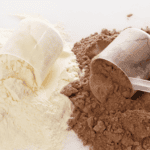
The whey-vs-plant debate has shifted considerably since 2020. The old answer was simple: whey wins for muscle building, plant protein is for vegans. The current research picture is more nuanced and more interesting.
A 2025 meta-analysis of 32 human trials involving 1,538 adults found that strength outcomes were identical between plant and animal protein groups. Muscle mass showed animal protein a slight edge, but the effect size was only -0.21, which is practically negligible in real-world application. A separate 2024 study found that a plant protein blend stimulates post-exercise myofibrillar protein synthesis rates equivalently to whey in resistance-trained adults.
Neither protein source is universally better. The right choice depends on your dietary approach, digestive tolerance, environmental priorities, and which specific protein sources you are comparing. This guide cuts through the marketing noise with the current evidence.
How Protein Quality Is Measured
Before comparing whey and plant protein, you need to understand how protein quality is assessed scientifically.
PDCAAS (Protein Digestibility Corrected Amino Acid Score): Rates protein from 0 to 1.0 based on how well it delivers all nine essential amino acids relative to human needs, adjusted for digestibility. A score of 1.0 is the ceiling.
DIAAS (Digestible Indispensable Amino Acid Score): A newer, more accurate metric that measures amino acid digestibility in the small intestine rather than the whole gut. Whey typically scores above 1.0 on DIAAS, meaning it exceeds the reference protein pattern.
Leucine content: Leucine is the BCAA most directly responsible for activating muscle protein synthesis through the mTOR pathway. Research identifies approximately 2 to 3 grams of leucine per serving as the threshold required to maximally stimulate muscle building.
These three metrics largely explain why whey has historically led the comparison, and why well-formulated plant protein blends have closed the gap significantly.
Whey Protein: Strengths and Limitations
Whey is a dairy byproduct derived from cheese and yogurt production. It is the liquid fraction of milk that separates during curdling, then filtered, dried, and concentrated into powder.
What makes whey strong:
- PDCAAS of 1.0 (the maximum possible score)
- DIAAS typically above 1.0, meaning it exceeds the human essential amino acid reference pattern
- Approximately 2.3 to 2.7 grams of leucine per 30-gram serving (the highest of any protein source)
- Approximately 5.5 grams of total BCAAs per serving
- Rapid absorption rate (most amino acids appear in blood within 60 to 90 minutes)
- Rich in cysteine, the precursor to glutathione (the body’s primary antioxidant)
- Contains bioactive compounds: lactoferrin, immunoglobulins, and beta-lactoglobulin
Organic grass-fed whey adds higher omega-3 fatty acids, CLA, and immunoglobulin concentrations than conventional grain-fed whey. Our complete Organic Whey Protein guide covers the full nutrition profile and what organic certification adds.
Limitations of whey:
- Not suitable for vegans or people with dairy allergies
- Contains lactose (3 to 5g per serving in concentrate; minimal in isolate)
- Higher environmental footprint than plant proteins
- Some conventional products carry synthetic hormone and antibiotic residue risks
- A 2025 Clean Label Project review found 47% of protein powders exceeded safe lead limits, though grass-fed whey carries 9x less lead than most plant protein sources
Plant Protein: Strengths and Limitations
Plant protein is not a single thing. Pea, rice, hemp, soy, and grain-based proteins all behave differently, have distinct amino acid profiles, and carry different strengths and limitations.
Pea protein is currently the most researched and most competitive plant protein alternative to whey. It is derived from yellow split peas and is technically a complete protein, containing all nine essential amino acids. Its leucine content runs approximately 2 grams per 25-gram serving, compared to 2.65 grams for whey, both within the optimal leucine stimulation range. A double-blind 12-week trial found no significant difference in muscle thickness gains between pea and whey groups. For the full nutrition profile of peas as a whole food, our Organic Lentils and Beans guide covers legume protein in dietary context.
Rice protein is high in methionine but low in lysine, making it incomplete alone. It becomes a near-complete protein when combined with pea protein.
Hemp protein provides all nine essential amino acids and delivers omega-3 fatty acids alongside protein. However, hemp protein is only 30 to 50% protein by weight compared to 80 to 90% for pea isolate, so larger servings are needed.
Soy protein is the plant source with the highest PDCAAS (0.91 to 1.0), comparable to whey. However, soy carries more debate around phytoestrogen content, GMO sourcing, and allergen concerns.
Pea and rice blend is the gold standard plant protein formulation. Pea compensates for rice’s low lysine; rice compensates for pea’s lower methionine and cysteine. Together they create a complete amino acid profile approaching whey.
Plant proteins deliver additional benefits whey cannot: dietary fiber, phytonutrients, antioxidants, and iron. Pea protein provides 20 to 30% of the daily iron requirement per serving. Whey provides calcium but essentially no iron.
Head-to-Head Comparison: Whey vs. Major Plant Proteins
| Factor | Whey (Grass-Fed) | Pea Protein | Pea + Rice Blend | Hemp Protein | Soy Protein |
|---|---|---|---|---|---|
| Protein per 30g | 22 to 27g | 20 to 24g | 20 to 25g | 12 to 15g | 22 to 25g |
| PDCAAS | 1.0 | 0.82 | ~0.90 | ~0.66 | 0.91 to 1.0 |
| Complete protein | Yes | Yes | Yes | Yes | Yes |
| Leucine per serving | ~2.5g | ~2.0g | ~2.2g | ~1.5g | ~2.0g |
| Total BCAAs | ~5.5g | ~4.5g | ~5.0g | ~3.5g | ~4.8g |
| Absorption speed | Fast | Moderate | Moderate | Slow | Moderate |
| Iron content | Low | High | High | Moderate | Moderate |
| Fiber content | None | 1 to 2g | 1 to 2g | 6 to 8g | 1g |
| Omega-3 content | Moderate (CLA) | Low | Low | High (ALA) | Low |
| Lactose | 3 to 5g (concentrate) | None | None | None | None |
| Vegan | No | Yes | Yes | Yes | Yes |
| Heavy metal risk | Lower | Variable | Variable | Variable | Higher (rice) |
| Environmental impact | Higher | Lower | Lower | Lowest | Moderate |
Muscle Building: What the Latest Research Shows
This is where most people’s interest centers, and the 2024 to 2025 research has substantially updated the picture.
The traditional view: Whey is superior for muscle building due to higher leucine, faster absorption, and superior PDCAAS scores.
The current evidence:
A 2024 study published in a peer-reviewed journal (Van Der Heijden et al.) found that a plant protein blend ingestion stimulates post-exercise myofibrillar protein synthesis rates equivalently to whey in resistance-trained adults. This is the most direct measure of muscle-building stimulus.
A 2025 meta-analysis of 32 randomized controlled trials involving 1,538 adults found identical strength outcomes between plant and animal protein groups. Muscle mass showed animal protein a very slight advantage with an effect size of -0.21, which researchers note is practically negligible in real-world application.
A 2025 study comparing plant-based (soy and pea protein) vs whey protein drinks found no significant differences in resistance-training-induced increases in whole-body lean mass, muscle cross-sectional area, or muscle strength between groups.
The pattern that emerges from the current literature is clear: when plant protein is properly formulated (especially pea-rice blends), adequately dosed (matched to whey on total protein and leucine), and consumed consistently, muscle building outcomes are comparable to whey.
The caveat is dosing. Because many plant protein powders are slightly lower in leucine per serving, using a slightly larger scoop (35 to 40 grams instead of 30 grams) helps close the gap. For understanding how complete plant proteins from whole foods contribute alongside supplements, our Organic Quinoa Nutrition guide covers quinoa’s complete amino acid profile in detail.
Digestibility and Gut Tolerance
Digestibility is where whey maintains a clearer advantage over most plant proteins, particularly for people with sensitive digestion.
Whey protein, especially isolate, is highly digestible and gentle on the gut for people without dairy sensitivity. Plant proteins contain antinutrients including phytates, lectins, and tannins that can reduce mineral absorption and digestibility. Food processing (isolation, fermentation, sprouting) significantly reduces antinutrient content.
For lactose-sensitive individuals, whey isolate removes most lactose and is well-tolerated by most people. People with full dairy allergies need plant-based alternatives. Our guide on Organic Yogurt and Kefir covers other organic dairy proteins and how they compare for people managing lactose sensitivity.
Environmental and Ethical Considerations
Plant proteins have a clearly lower environmental footprint than dairy-derived proteins. Pea protein production uses significantly less water and generates fewer greenhouse gas emissions per gram of protein than whey production.
Hemp protein production is particularly sustainable, with minimal water requirements and no pesticide dependence. This is one reason hemp protein has grown in popularity among environmentally conscious consumers despite its lower protein concentration.
For consumers who also prioritize animal welfare alongside their protein choices, our guide on Is Organic Farming Sustainable? covers how organic animal agriculture compares to conventional and how it sits relative to plant-based food production.
Who Should Choose Whey
Whey protein is the better choice when:
- You are not vegan and tolerate dairy well
- You prioritize the highest possible leucine content per serving for resistance training
- You want the most research-backed protein for muscle building in a single supplement
- You prefer faster post-workout absorption
- You value bioactive compounds (lactoferrin, immunoglobulins, glutathione precursors)
- You are over 65 and managing sarcopenia, where protein quality and leucine are particularly critical
Choose organic grass-fed whey specifically over conventional for cleaner sourcing and higher bioactive compound concentrations. Our Organic Whey Protein guide covers what certifications to look for in detail.
Who Should Choose Plant Protein
Plant protein is the better choice when:
- You follow a vegan or dairy-free diet
- You have a dairy allergy or intolerance that excludes even whey isolate
- You want additional fiber, iron, and phytonutrients alongside protein
- You are prioritizing environmental sustainability
- You have long-term cardiovascular health concerns (plant proteins are associated with lower cardiovascular risk in population studies)
- You find whey causes digestive discomfort or bloating
Choose a pea-rice blend over single-source plant proteins for the most complete amino acid profile. Look for certified organic, third-party tested options with a full certificate of analysis available. Our guide on How to Spot Fake Organic Products applies directly to evaluating organic supplement claims.
Practical Decision Framework
| Your Situation | Best Choice |
|---|---|
| Vegan or dairy-free | Pea-rice blend (matched dose to whey) |
| Lactose intolerant (not allergic) | Whey isolate or pea protein |
| Maximizing muscle gain, no dietary restrictions | Organic grass-fed whey |
| Environmental priority | Hemp or pea protein |
| Budget-conscious | Pea protein (lower cost per gram than whey) |
| Over 60, managing muscle loss | Whey (highest leucine per serving) |
| Digestive sensitivity to dairy | Pea-rice blend |
| Already eating high-protein diet | Either; supplement type matters less |
FAQs
Q1: Is whey protein better than plant protein for building muscle?
Whey has traditionally led on muscle building due to higher leucine (2.5g vs ~2.0g per serving) and a PDCAAS of 1.0. However, a 2025 meta-analysis of 32 trials involving 1,538 adults found identical strength outcomes between plant and animal protein groups. Muscle mass showed animal protein a slight edge with an effect size of only -0.21, practically negligible. Well-formulated pea-rice blends at matched doses now produce comparable muscle building results to whey.
Q2: What is the best plant protein for muscle building?
A pea and rice protein blend is the most effective plant-based option. Pea protein is low in methionine; rice protein is low in lysine. Combined, they create a complete essential amino acid profile approaching whey. A 2024 study found a plant protein blend stimulated post-exercise myofibrillar protein synthesis equivalently to whey in resistance-trained adults. Soy protein isolate is also a strong single-source option with a PDCAAS of 0.91 to 1.0.
Q3: Is pea protein as good as whey protein?
Nearly, yes. A double-blind 12-week study found no significant difference in muscle thickness gains between pea and whey protein groups. Each 25g serving of pea protein delivers approximately 2 grams of leucine, compared to 2.65 grams for whey, with both falling within the optimal muscle-building leucine range. Pea protein also delivers more iron (20 to 30% DV per serving) and has a lower heavy metal contamination risk than most plant proteins.
Q4: Which protein powder has the least heavy metals?
Organic grass-fed whey protein contains approximately 9 times less lead than plant-based protein powders, according to 2025 Clean Label Project data. Among plant proteins, pea protein generally shows lower heavy metal contamination than brown rice protein. Always look for third-party tested products with a published certificate of analysis (COA) from NSF Certified for Sport or Informed Sport, which independently verify safety thresholds.
Q5: Can you build muscle with plant protein alone?
Yes. A 2025 study comparing plant-based protein (soy and pea) vs whey protein found no significant differences in lean mass, muscle cross-sectional area, or strength between groups after a resistance training program. The key requirements are matching protein and leucine intake (slightly larger servings may be needed with plant protein), using a complete amino acid source or blend, and maintaining consistent intake around training.
Q6: Is whey or plant protein better for weight loss?
Both support weight loss through protein’s satiety effect and preservation of lean muscle during caloric restriction. A 2024 study found protein, fiber, and calorie reduction together led to better weight loss outcomes than calorie restriction alone. Plant proteins deliver additional dietary fiber that further supports satiety and gut health. For weight management, the total daily protein target and calorie balance matter more than the specific protein source.
Q7: Which protein is better for the environment?
Plant proteins have a significantly lower environmental footprint than whey. Pea and hemp protein production uses substantially less water and generates fewer greenhouse gas emissions per gram of protein than dairy-derived whey production. Hemp protein is particularly sustainable with minimal water requirements and no synthetic pesticide dependence. If environmental impact is a priority, organic pea-rice blend or hemp protein are the most sustainable supplementation options.
Q8: How do I switch from whey to plant protein without losing muscle?
The main adjustment is dosing. Because most plant protein powders deliver slightly less leucine per gram than whey, increasing serving size by 25 to 30% (from 30g to 37 to 40g per serving) compensates effectively. Choose a pea-rice blend over single-source plant proteins. Maintain the same post-workout timing window (within two hours of training) and total daily protein intake. Most people who make this switch carefully report no change in training progress within four to eight weeks.
The Bottom Line
The old hierarchy of whey automatically beating plant protein for muscle building no longer holds up against the current evidence. A 2025 meta-analysis of over 1,500 adults found identical strength outcomes across plant and animal protein groups. A 2024 study found a pea-rice blend stimulated muscle protein synthesis equivalently to whey in trained adults.
The gap that remains is modest and largely dosing-dependent. Whey still leads on leucine per serving, absorption speed, and PDCAAS score. Plant protein blends have closed the practical muscle-building gap while adding fiber, iron, phytonutrients, and environmental advantages.
The best protein is the one you will take consistently, that fits your dietary approach, and that comes from a transparent, certified source with third-party testing. For most people with no dietary restrictions, organic grass-fed whey is the most research-backed single-source option. For vegans and dairy-free individuals, an organic pea-rice blend delivers comparable results.
For building whole-food protein intake alongside any supplement, our guides on Red Kidney Beans, Organic Quinoa Nutrition, and Health Benefits of Eating Organic cover the complete dietary foundation.