

If you’ve ever stood in a grocery aisle staring at labels like USDA Organic, the EU leaf, “Bio,” “Soil Association,” or “JAS,” you’re not alone. Organic certifications are meant to build trust, but the ecosystem of standards, logos, and claims can feel messy fast.
This guide breaks down the major organic certifications (USDA and EU), compares them, outlines what they guarantee and what they don’t, and explains how to spot greenwashing when brands rely on vague terms like “natural” and “clean.”
What “organic certification” actually means
An organic certification is a regulated, third-party verified standard that controls:
- How crops are grown (no most synthetic pesticides/herbicides, no synthetic fertilizers, no GMOs in many systems)
- How animals are raised (feed rules, medication rules, living conditions)
- How products are processed (restricted additives, contamination controls)
- Documentation and traceability (audits, records, inspections)
The label isn’t just a vibe. It’s supposed to represent a paper trail.
USDA Organic explained
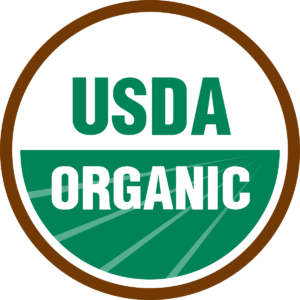
Who runs it?
The USDA’s National Organic Program (NOP) sets rules and oversees accredited certifiers.
What USDA Organic guarantees (in plain English)
For crops:
- No GMOs
- No most synthetic pesticides/herbicides
- No synthetic fertilizers (with narrow exceptions depending on allowed inputs list)
- Soil and fertility management practices required (crop rotation, etc.)
For livestock (dairy, meat, eggs):
- Organic feed
- No growth hormones
- Antibiotics are not allowed for organic status (animals can be treated, but then lose organic status)
- Outdoor access requirements (details depend on species and operation)
For processed foods:
- Tight rules on allowed ingredients and processing aids
- Additives are restricted compared to conventional products
USDA’s 4 label levels (this is where most people get confused)
-
100% Organic
Everything must be organic (except water and salt). -
Organic (the most common “USDA Organic” you see)
At least 95% of ingredients are organic. The remaining 5% must be from an approved list. -
Made with Organic …
At least 70% organic ingredients. Can list up to 3 organic ingredients/food groups on the front.
Cannot use the USDA Organic seal. -
Less than 70% organic ingredients
Can only identify organic ingredients in the ingredient list. No USDA seal.
Quick shopper tip
If you want the strongest USDA assurance, look for:
- USDA Organic seal (usually indicates “Organic” or “100% Organic”)
- A named certifier on the package (often in small print)
EU Organic explained (the “Euro Leaf”)

Who runs it?
EU rules are set at the EU level; enforcement and certifiers operate through member states.
What the EU organic label guarantees
EU Organic rules are broadly similar to USDA Organic, especially around:
- Prohibiting GMOs
- Restricting synthetic pesticides and fertilizers
- Requiring organic management practices and inspections
- Restricting additives in processing
What’s unique about the EU system
- The EU organic leaf logo is widely used for packaged organic products.
- You’ll often see a code (e.g., “DE-ÖKO-xxx”) indicating the certifying body and country.
- Labels may also mention the origin of agricultural ingredients (EU/non-EU agriculture).
Quick shopper tip
If you see the EU leaf plus the certifier code, you’re looking at a regulated product—not a marketing claim.
USDA vs EU Organic: what’s different?
They’re similar enough that many products can be traded across systems via equivalency arrangements, but there are differences in details and enforcement style.
Here’s the practical version:
- Core principles are aligned: fewer synthetic inputs, no GMOs, more traceability.
- Specific allowed inputs (certain pesticides/fertilizers) can vary.
- Livestock and animal welfare details can differ depending on updates, interpretations, and local enforcement.
- Processing additive lists differ in specifics.
What to do with this as a consumer
If it’s USDA Organic or EU Organic, you’re generally in the “credible organic certification” zone. Your bigger risk isn’t USDA vs EU—it’s getting tricked by non-certified labels pretending to be organic.
“Beyond” USDA and EU: major organic certifications worldwide
Canada Organic
Canada has its own federal organic regime. Products often show the Canada Organic logo (a maple leaf).
UK Organic
Post-Brexit, the UK uses UK-specific organic rules. You’ll commonly see:
- Soil Association Organic (high recognition)
- OF&G
- Other UK-approved certifiers
JAS Organic (Japan)
Japan’s organic standard is JAS. If you’re buying imported organic products in Asia, this seal matters.
Australia
Australia’s organic ecosystem includes well-known certifiers like:
- Australian Certified Organic (ACO)
- NASAA Certified Organic
India (NPOP)
India’s organic exports often follow NPOP standards.
Private and “value-add” seals you’ll see
These aren’t always “organic certifications” themselves, but they can add context:
Non-GMO Project Verified
- Means GMO avoidance verified
- Doesn’t mean pesticide-free
- Doesn’t mean organic
- Great when used in addition to organic, but not a replacement
Regenerative Organic Certified (ROC)
Combines organic baseline + stronger requirements for:
- Soil health/regeneration
- Animal welfare
- Social fairness
If you see ROC, it’s usually a “beyond organic” signal (where available).
Comparison Table: Major Organic Certifications
You can drop this directly into WordPress (Table block or HTML).
| Certification | Region | Governing Body | GMOs Allowed? | Synthetic Pesticides | Livestock Rules | Common Seal |
|---|---|---|---|---|---|---|
| USDA Organic | United States | USDA National Organic Program (NOP) | No | Prohibited (with limited natural inputs allowed) | Organic feed, no growth hormones, no routine antibiotics, outdoor access | USDA Organic Seal |
| EU Organic | European Union | European Commission + national certifiers | No | Prohibited (limited approved substances) | Strict animal welfare, organic feed, and outdoor access | EU Organic Leaf |
| Canada Organic | Canada | Canadian Food Inspection Agency (CFIA) | No | Prohibited | Similar to USDA, strong livestock standards | Canada Organic Logo |
| UK Organic | United Kingdom | DEFRA + certifiers (Soil Association, OF&G) | No | Prohibited | Often stricter welfare rules than EU minimums | Soil Association / UK Organic |
| JAS Organic | Japan | Ministry of Agriculture (MAFF) | No | Prohibited | Organic feed and limited medication use | JAS Organic Seal |
Organic certification in food vs personal care: important nuance
Food organic standards are clearer than personal care.
- In the US, USDA Organic can apply to cosmetics if the product meets the standard, but many “clean beauty” brands use organic-sounding language without qualifying.
- You’ll also see standards like COSMOS (common in Europe) for cosmetics—different from food regulations.
Simple rule:
For skincare and cosmetics, don’t assume “organic” means certified unless you see a real certifier/logo and a traceable standard.
How to read a label like a pro
1) Look for the real certification mark
- USDA seal
- EU leaf + certifier code
- Canada Organic logo
- JAS, ACO, Soil Association, etc.
2) Verify the “level”
If you’re in the US:
- “Organic” / “100% Organic” = strongest
- “Made with organic…” = partial organic
3) Watch for fake-friendly words
These are not regulated the same way:
- Natural
- Clean
- Eco-friendly
- Green
- Pure
- Farm fresh
4) Scan the ingredient list anyway
“Organic” doesn’t automatically mean:
- Low sugar
- Low sodium
- Healthy macros
Organic cookies are still cookies.
Common confusion points (and the truth)
“Organic means pesticide-free.”
Not exactly. Organic restricts synthetic pesticides, but some approved natural pesticides may be used. The real win is typically lower residue and lower toxic load, not absolute zero.
“Organic automatically means local.”
No. Organic is how it’s produced, not where.
“If it’s Non-GMO Verified, it’s basically organic.”
No. Non-GMO only addresses genetic engineering, not pesticides or farming inputs.
The best way to use certifications as a shopper
If you want maximum impact without going broke:
-
Prioritize certified organic for:
- High-pesticide produce (Dirty Dozen-type items)
- Dairy and eggs
- Foods your family eats daily
-
Use conventional strategically for:
- Lower-residue produce (Clean Fifteen-type items)
- Occasional ingredients
- When local, trusted farms are available (even if not certified)
Frequently Asked Questions (FAQs)
1. Is “Certified Organic” the same as “Pesticide-Free”?
Not exactly. Organic farmers can use pesticides, but they must be derived from natural sources (like neem oil or pheromone traps) and are only allowed after biological and mechanical methods have failed.
2. Can hydroponic (soilless) food be organic?
Under USDA rules, yes. Under EU and Regenerative Organic (ROC) rules, no. This is one of the biggest points of contention in modern organic research.
3. Why do some small local farmers not have the seal?
Certification is expensive and paperwork-heavy. Many “beyond organic” small farmers choose to skip the official seal but follow the rules (or stricter ones) anyway. I always suggest talking to your farmer at the market!
4. Does the organic seal mean it’s more nutritious?
While research shows organic produce often has higher antioxidant levels and fewer heavy metals, the seal’s primary guarantee is about the process of production and the absence of synthetic chemicals.
5. How often are organic farms inspected?
At a minimum, once a year. However, certifying agents can (and do) perform unannounced inspections and soil testing at any time.
Final takeaway
Organic certifications exist to protect you from marketing fluff—when you know what to look for. USDA Organic and EU Organic are the big two most shoppers encounter, and both represent real oversight. Beyond that, country-specific seals and “beyond organic” certifications can add extra value—especially around soil health and animal welfare.
Certifications are not just about what is in the food; they are about the legacy left on the land. As a researcher, I always encourage consumers to look for the USDA or EU seals as a starting point, but to keep an eye out for “Regenerative” labels if they want to support the next frontier of agriculture.
The key is simple: trust seals, not slogans.








[…] baby food is made from ingredients grown and processed according to certified organic standards. In the United States, this means compliance with USDA Organic regulations. In Europe, products […]
[…] Under USDA Organic rules: […]
[…] by regulatory bodies (e.g., USDA National Organic Program, EU […]
[…] USDA Organic (U.S.) […]
[…] USDA Organic seal (USA) […]
[…] USDA Organic (USA) […]
[…] qualify as organic (depending on country standards such as USDA Organic or EU Organic), ingredients must be grown […]
[…] USDA Organic (United States) […]
[…] practices. If you want to understand exactly what that certification entails, our post on Organic Certifications Explained: USDA, EU & Beyond gives a thorough […]
[…] standards translate to what you see on a label is essential for savvy organic shoppers. Our post on Organic Certifications Explained: USDA, EU & Beyond walks through exactly what each certification guarantees and how to verify authenticity — […]
[…] food system is essential before building your organic dietary framework. Our comprehensive guide on Organic Certifications Explained: USDA, EU & Beyond breaks down exactly what each seal means and how to verify […]
[…] of what organic certification guarantees at each stage of food production, our guide on Organic Certifications Explained: USDA, EU and Beyond covers everything you need to […]
[…] USDA Organic or equivalent certification […]
[…] guide on Organic Certifications Explained: USDA, EU and Beyond explains exactly what certification standards require and how they are enforced at every stage of […]
[…] your organic labels. Our guide on How to Spot Fake Organic Products and our breakdown of Organic Certifications Explained help you confirm that the organic produce you buy actually meets the standards it […]
[…] To carry the USDA Organic label, the oats must meet strict federal requirements. You can learn more about how these standards work in our detailed guide to organic certifications. […]
[…] that risk entirely. To understand what organic certification actually guarantees, our guide to organic certifications explains the standards in plain […]
[…] diet or that grass was the primary food source. For more on what the certification covers, our Organic Certifications Explained guide breaks down each tier of the USDA organic […]
[…] carry independent testing verification rather than relying on a facility claim alone. Our guide on Organic Certifications Explained covers how to read certification labels […]
[…] certified organic also means the product is non-GMO by default. Our overview of organic certifications explains exactly what the USDA Organic seal guarantees and why it […]
[…] of what organic certification actually guarantees at every stage of production, our guide to organic certifications covers the legal standards in plain […]
[…] a clear breakdown of what those certification requirements actually mean, our Organic Certifications Explained guide covers every tier of the USDA organic seal. For understanding how conventional growing […]
[…] overview of what organic certification guarantees at the farming and production level, our guide to organic certifications covers the legal standards in plain […]
[…] of what organic certification legally requires at each stage of production, our guide to organic certifications covers the standards in practical […]
[…] a clear overview of what the certification tiers and labels actually mean for consumers, our Organic Certifications Explained guide covers every level of the USDA organic seal. For a broader explanation of what organic […]
[…] what organic certification legally prohibits at every stage from farming to packaging, our guide to organic certifications covers the standards in practical […]
[…] guide to organic certifications explains the full chain of verification that a certified organic spice must pass before it reaches […]
[…] picture of how organic farming standards require and protect soil health, our Organic Standards and Organic Certifications Explained guides cover what certification actually demands at the farm […]
[…] For a full explanation of what that baseline requires and how to verify it on a label, our guide to organic certifications covers every tier of the current certification […]
[…] guide to organic certifications explains how each tier of the certification process ensures these standards are verified and […]
[…] guide to organic certifications explains the full chain of verification that a certified organic grain product must pass from field […]
[…] guide to organic certifications covers the foundational certification framework that applies across the entire organic supply […]
[…] guide to organic certifications explains the full verification framework that organic cotton certification operates […]
[…] context on how certification standards apply to plant-based protein products, our Organic Certifications Explained guide covers the full USDA organic […]
[…] a full picture of what organic certification actually guarantees versus what it does not, our Organic Certifications Explained guide and How to Spot Fake Organic Products guide cover label reading in practical […]
[…] guide to organic certifications explains the full verification framework for organic dried […]
[…] a full understanding of what USDA organic certification actually covers and what it does not, our Organic Certifications Explained guide covers the framework in […]
[…] guide on organic certifications explains the verification framework for organic […]
[…] le souligne le guide Organic Food Guides, le bio ne signifie pas « zéro pesticide » de façon absolue : des traitements naturels sont […]