Sugar is one of those ingredients that carries a complicated reputation, and rightfully so. But in recent years, a more “natural” alternative has been quietly taking over the shelves of health food stores and organic kitchens alike: organic cane sugar. Marketed as a cleaner, more wholesome option compared to conventional refined white sugar, it has attracted a loyal following among health-conscious consumers and organic lifestyle advocates.
But is organic cane sugar actually healthy? Or is it simply a more expensive version of the same thing we’ve been warned about for decades? As someone who has spent years navigating the nuanced world of organic food, I can tell you the answer isn’t black and white, and that’s exactly what makes it worth exploring deeply.
What Is Organic Cane Sugar?
Organic cane sugar is derived from sugarcane (Saccharum officinarum) that has been grown without the use of synthetic pesticides, herbicides, or chemical fertilizers. It is minimally processed, typically evaporated and crystallized, which means it retains a light golden hue and very faint molasses flavor, unlike the stark white, heavily refined table sugar most of us grew up with.
To carry an organic label, the sugarcane must be cultivated according to certified organic farming standards. In the United States, this means USDA Organic certification — a rigorous process that ensures no genetically modified organisms (GMOs), no synthetic chemical inputs, and compliance with sustainable land management practices. If you want to understand exactly what that certification entails, our post on Organic Certifications Explained: USDA, EU & Beyond gives a thorough breakdown.
What organic cane sugar is not is coconut sugar, raw sugar, turbinado, or brown sugar — though these are often confused with it. Organic cane sugar is specifically sourced from organic-certified sugarcane and goes through less processing than conventional white sugar, but more processing than truly “raw” sugar.
The Nutritional Profile: What’s Actually Inside
Let’s be honest about the nutrition. One teaspoon of organic cane sugar contains approximately:
- Calories: 16–17 kcal
- Carbohydrates: ~4.2 grams (almost entirely sucrose)
- Fiber: 0 grams
- Protein: 0 grams
- Fat: 0 grams
- Micronutrients: Trace amounts of calcium, iron, and potassium — but truly negligible quantities
Compared to conventional white refined sugar, the nutritional difference is minimal. The key distinction is that organic cane sugar retains a slightly higher amount of trace minerals due to less aggressive refining, but we’re talking fractions of a percent. You would need to consume dangerously large amounts to obtain any meaningful micronutrient benefit from sugar alone.
So from a purely macronutrient standpoint, organic cane sugar and conventional sugar are essentially the same: they are both sucrose, they both spike blood sugar, and they both provide calories with little nutritional value.
Where Organic Cane Sugar Does Differ — And It Matters
While the caloric and macronutrient profiles are nearly identical, there are meaningful differences that justify why many health-conscious consumers and organic food advocates make the switch. These differences aren’t about the sugar molecule itself, they’re about what surrounds it.
1. No Synthetic Pesticide Residues
Conventional sugarcane farming is notorious for heavy pesticide and herbicide use. Chemicals like glyphosate (the active ingredient in Roundup) are commonly applied to conventional sugarcane crops. While sugarcane is processed significantly before reaching your table, trace residues of agricultural chemicals can make their way into the final product.
Organic cane sugar eliminates this concern entirely. The sugarcane is grown without synthetic chemical inputs, which means your sugar is free from pesticide residues. We’ve covered the broader issue of pesticide exposure in our post on What Pesticides Are Used in Organic Farming, and the principles discussed there apply directly to organic cane sugar production.
2. No GMOs
Conventional sugar sources, particularly sugar beets, which account for a significant portion of the US sugar supply, are frequently genetically modified. Organic certification prohibits the use of GMOs entirely, so choosing organic cane sugar is a reliable way to sidestep GM-derived sweeteners. Our comparison guide on Organic vs. Non-GMO: What’s the Difference? explains why these two labels are distinct and why both matter.
3. More Sustainable and Ethical Farming Practices
Organic sugarcane farming is held to higher environmental standards. It emphasizes soil health, biodiversity, water conservation, and the avoidance of synthetic chemicals that can runoff into water systems and damage local ecosystems. For those who follow an organic lifestyle not just for personal health but for environmental reasons, this distinction is significant. Our deep dive into Is Organic Farming Sustainable? explores how these practices create long-term ecological benefits.
4. Less Aggressive Refining
Because organic cane sugar is minimally processed, it retains its natural golden color and a subtle complexity of flavor that heavily refined white sugar lacks. The refining process for white sugar involves bleaching agents, bone char (often used in conventional sugar processing and a concern for vegans), and multiple filtration stages that strip away all trace minerals. Organic cane sugar skips most of these steps, making it a marginally cleaner product.
The Hard Truth: Sugar Is Still Sugar
Here’s where I need to be direct with you, because genuine advice matters more than just telling people what they want to hear.
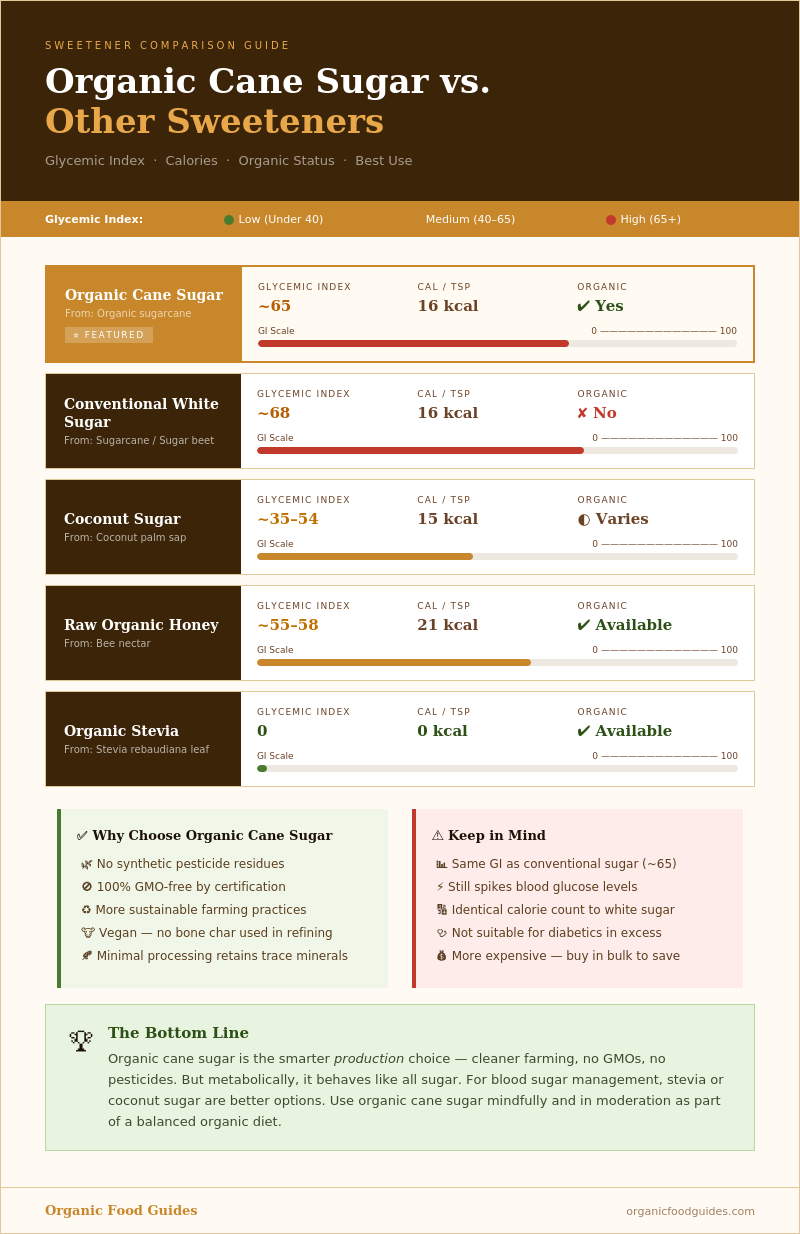
Organic cane sugar is still sugar. Its glycemic index is approximately 65, nearly identical to conventional table sugar (~65–68). It still causes blood glucose spikes. It still contributes to the same metabolic issues that excessive sugar consumption is associated with: weight gain, insulin resistance, inflammation, dental decay, and increased risk of type 2 diabetes and cardiovascular disease.
The “organic” label does not change the fundamental chemistry of sucrose. If you’re consuming large amounts of organic cane sugar, in baked goods, sweetened beverages, or desserts, the health consequences are the same as consuming the same amounts of conventional sugar. Our post on Organic Food and Heart Health discusses how dietary choices, including sugar intake, interact with cardiovascular risk factors.
There is a real danger in the “health halo” effect, the psychological tendency to overconsume a product because it carries a label like “organic,” “natural,” or “non-GMO.” Many consumers eat more of a product simply because it sounds healthier, which can paradoxically lead to worse health outcomes. This is a pattern we also explored in Common Misconceptions About Organic Labels.
Organic Cane Sugar vs. Other Sweeteners
How does organic cane sugar stack up against the other sweeteners you might be reaching for?
Organic Cane Sugar vs. Coconut Sugar: Coconut sugar has a slightly lower glycemic index (~35–54) and contains small amounts of inulin (a prebiotic fiber), iron, zinc, and antioxidants. It is often considered a marginally better option for blood sugar management — though it’s still sugar.
Organic Cane Sugar vs. Raw Honey: Raw organic honey contains enzymes, antioxidants, and antimicrobial compounds. It’s sweeter than sugar gram for gram (so you use less), and has documented health benefits in moderate amounts. It’s a more nutritionally complex sweetener overall.
Organic Cane Sugar vs. Maple Syrup: Pure organic maple syrup contains manganese, zinc, and antioxidant compounds. Like honey, it offers more nutritional complexity than cane sugar, though again, it is still a high-sugar product.
Organic Cane Sugar vs. Stevia: Organic stevia is a zero-calorie, plant-derived sweetener with no glycemic impact. For people managing blood sugar, weight, or metabolic health, stevia is a far superior option from a health standpoint.
Organic Cane Sugar vs. Conventional White Sugar: As discussed, the nutritional difference is negligible — but the production difference (no pesticides, no GMOs, less processing) makes organic cane sugar the better choice when sugar is being used.
Who Should Be Mindful of Organic Cane Sugar?
While organic cane sugar is a fine choice within a balanced diet for most people, there are specific groups who should be especially cautious:
Diabetics and pre-diabetics: The glycemic impact of organic cane sugar is virtually identical to conventional sugar. Blood sugar management requires limiting all sucrose sources, regardless of how they were grown.
Those with hormonal imbalances: High sugar consumption can interfere with hormonal regulation, particularly insulin, cortisol, and estrogen. Our post on Organic Food and Hormonal Balance explores how dietary choices, including sweetener selection, affect endocrine health.
People focused on weight management: Sugar, organic or not, contributes to caloric surplus and can stimulate appetite. If weight loss is a priority, sweetener intake of any kind should be moderated. You might find our guide on Organic Salads for Weight Loss helpful for building meals that naturally reduce the need for added sweeteners.
Children: Children are particularly susceptible to the effects of high sugar intake on dental health, behavior, and long-term metabolic programming. Organic baby food and children’s nutrition choices matter, something we covered in our Organic Baby Food guide.
How to Use Organic Cane Sugar Wisely
The goal isn’t to demonize organic cane sugar, it’s to use it thoughtfully. Here are practical ways to incorporate it without overdoing it:
Use it in moderation as a finishing sweetener. Rather than baking with cups of it, try using small amounts to sweeten organic teas, dressings, or homemade sauces where you can control exact quantities. Speaking of organic teas, our roundup of Top Organic Teas for Health Benefits features naturally sweet herbal options that need little to no added sugar.
Pair it with fiber-rich foods. Consuming sugar alongside fiber (think whole grains, fruits, and vegetables) slows glucose absorption and blunts blood sugar spikes.
Replace some sugar in recipes with whole fruit. Mashed banana, unsweetened applesauce, and dates can reduce the amount of added sugar needed in baked goods while adding fiber and micronutrients.
Try it in organic mocktails and drinks. If you enjoy crafting homemade drinks, organic cane sugar can be used to make simple syrups that elevate flavor without artificial additives. Our collection of Organic Drinks and Mocktails Recipes has some excellent ideas here.
Buy in bulk to reduce cost. Organic cane sugar tends to be more expensive than conventional sugar, but buying it in bulk significantly reduces the per-unit cost. Our guide on Buying Organic in Bulk covers how to do this smartly.
FAQs: Is Organic Cane Sugar Healthy?
Q1: Is organic cane sugar better than regular white sugar? Organic cane sugar is better than regular white sugar in how it is produced, it is grown without synthetic pesticides, herbicides, or GMOs, and undergoes less aggressive refining. However, from a purely nutritional and metabolic standpoint, both are nearly identical. They contain the same amount of sucrose, calories, and have a similar glycemic index. If you are going to use sugar, organic cane sugar is the cleaner choice, but it should still be consumed in moderation.
Q2: Does organic cane sugar spike blood sugar? Yes. Organic cane sugar has a glycemic index of approximately 65, which is virtually the same as conventional white sugar (~65–68). It will raise blood glucose levels in a comparable way. People with diabetes, insulin resistance, or pre-diabetes should treat organic cane sugar with the same caution as any other form of sucrose.
Q3: Is organic cane sugar safe for diabetics? Organic cane sugar is not recommended as a free-use sweetener for diabetics. While it avoids pesticide residues and GMOs, its impact on blood sugar is essentially the same as conventional sugar. Diabetics looking for a safer sweetener should consider zero-glycemic options like organic stevia or monk fruit sweetener, and should always consult their healthcare provider before making dietary changes.
Q4: What is the difference between organic cane sugar and coconut sugar? Both are considered more natural alternatives to refined white sugar, but they differ in sourcing, processing, and nutritional profile. Coconut sugar is derived from the sap of coconut palm flowers, has a slightly lower glycemic index (~35–54), and contains small amounts of inulin (a prebiotic fiber) along with trace minerals like iron and zinc. Organic cane sugar comes from sugarcane and is more neutral in flavor. Coconut sugar is often regarded as a marginally healthier option for blood sugar management, though both are still forms of added sugar.
Q5: Is organic cane sugar vegan? Yes, organic cane sugar is generally considered vegan. One concern with conventional white sugar is that some refineries use bone char (derived from animal bones) as a filtering agent to achieve the bright white color. Organic cane sugar skips this stage of refining — its minimal processing means bone char is not used, making it a vegan-friendly sweetener.
Q6: Does organic cane sugar contain any nutrients? Organic cane sugar does contain trace amounts of calcium, iron, and potassium due to its minimal processing. However, these quantities are so small that they offer no meaningful nutritional benefit in the amounts typically consumed. You should not rely on organic cane sugar as a source of micronutrients.
Q7: How is organic cane sugar different from raw sugar or turbinado sugar? These terms are often used interchangeably but they are not the same. Raw sugar and turbinado are made from conventional (non-organic) sugarcane and undergo slightly more processing than organic cane sugar. Turbinado sugar is steam-cleaned to remove most of the molasses but retains a coarse texture and light caramel flavor. Organic cane sugar is specifically certified organic, meaning the sugarcane was grown under strict organic farming standards. The “organic” designation is about how the cane was grown, not just how the sugar was processed.
Q8: Can I use organic cane sugar for baking? Absolutely. Organic cane sugar behaves almost identically to conventional white sugar in baking, it caramelizes well, provides structure to baked goods, and sweetens at the same ratio. Its subtle golden hue may slightly darken light-colored baked goods, but in most recipes this difference is imperceptible. It can be used as a 1:1 substitute for regular sugar in virtually any recipe.
Q9: Is organic cane sugar good for weight loss? No — organic cane sugar is not a weight loss-friendly food. It contains the same calories as conventional sugar (~16 calories per teaspoon) and provides no fiber, protein, or fat to promote satiety. Like all added sugars, it can contribute to a caloric surplus if consumed in excess. For weight management, minimizing all forms of added sugar, organic or not, is advisable.
Q10: How do I know if the organic cane sugar I’m buying is genuinely organic? Look for a certified organic seal on the packaging — in the US, this is the USDA Organic seal. This guarantees the product has been certified by an accredited certifying agency and meets all USDA National Organic Program (NOP) standards. Be cautious of products that use terms like “natural,” “pure cane,” or “unrefined” without a certified organic seal, these terms have no regulated meaning and do not guarantee organic farming practices. Our guide on How to Spot Fake Organic Products can help you shop more confidently.
The Verdict: Is Organic Cane Sugar Healthy?
The most accurate answer is: it’s healthier than conventional sugar in how it’s produced, but not in how it affects your body.
Choosing organic cane sugar over conventional white sugar is a meaningful decision for reducing your exposure to pesticide residues, avoiding GMO-derived sweeteners, and supporting more sustainable agricultural practices. These are real and legitimate reasons to make the switch, and they align with the broader values of an organic lifestyle.
However, organic cane sugar is not a health food. It should not be consumed freely under the assumption that the “organic” label neutralizes its effects on blood sugar, weight, or metabolic health. The same moderation principles that apply to any added sugar apply here as well.
If you’re already living an organic lifestyle, shopping thoughtfully, reading labels carefully, and making food choices rooted in both personal and environmental health — then organic cane sugar fits naturally into that framework as a conscious, minimal, and purposeful sweetener. Just don’t let the golden color and the certification seal trick you into using more of it than you should.
As with so much in the organic food world, the real power lies not in the product itself, but in how informed you are when you use it. And now, you are.
Want to explore more about navigating organic labels and making smart food choices? Check out our guide on How to Spot Fake Organic Products and our breakdown of Common Myths About Organic Food to keep building your organic food knowledge.